Wrenches: The Complete Guide to Types, Uses & Selection
Master every wrench in your toolbox. From adjustable and combination wrenches to torque and pipe wrenches — learn which type fits your project, how to size them correctly, and what to look for when building your collection.
EXPLORE WRENCH TYPESWhy Wrenches Matter: A wrench is one of the most frequently used hand tools in any home. Whether you are assembling furniture, repairing a faucet, or tuning up a bicycle, the right wrench makes the job safer, faster, and more precise. Understanding the different types and their best applications helps you work confidently and avoid damaging fasteners.
Understanding Wrenches: A Beginner-Friendly Overview
A wrench — also called a spanner in many parts of the world — is a hand tool designed to grip and turn nuts, bolts, and other fasteners. The core principle is simple: a shaped jaw or opening engages the flats of a fastener, giving you leverage to tighten or loosen it. Despite this simplicity, wrenches come in dozens of variations, each optimized for a specific task, clearance situation, or torque requirement.
For homeowners and DIY enthusiasts, the challenge is not finding a wrench but choosing the right one. Using an adjustable wrench on a stubborn pipe fitting, for example, can round the fastener and create a much larger problem. Similarly, tightening a cylinder head bolt without a torque wrench risks warping the component. This guide walks you through every major wrench category, explains the materials and sizing systems, and offers practical advice for building a well-rounded collection.
If you are planning broader tool acquisitions, our guide to essential tools for DIY beginners provides a useful framework for prioritizing your purchases. And if your projects lean toward woodworking, the woodworking section covers specialized tools and techniques that complement a solid wrench set.
The Major Wrench Types and When to Use Each
1. Adjustable Wrench (Crescent Wrench)
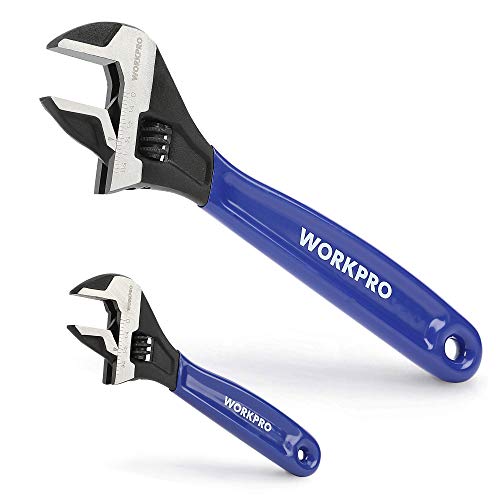
The adjustable wrench is the Swiss Army knife of the wrench world. A worm-gear mechanism slides the lower jaw to fit a range of fastener sizes, making it ideal for general-purpose tasks where carrying a full set is impractical. The trade-off is that the movable jaw can slip under heavy load, so it is best suited for light-to-medium duty work. When using an adjustable wrench, always pull toward the fixed jaw for maximum grip.
For a focused look at this versatile tool, see our detailed adjustable wrench guide.
2. Combination Wrench
A combination wrench features an open-end on one side and a box-end (ring) on the other, both sized for the same fastener. The open-end provides quick engagement in tight spaces, while the box-end offers full six- or twelve-point contact for higher torque without slipping. This dual functionality makes combination wrenches a cornerstone of any serious tool collection. They are available in both SAE and metric sizes, and most mechanics keep a full set of each.
3. Socket Wrench (Ratchet and Socket Set)
Socket wrenches use interchangeable sockets that fit over fasteners, connected to a ratcheting handle. The ratchet mechanism allows continuous turning without repositioning the tool — a huge time-saver in confined spaces. Socket sets typically include a range of sizes, extensions, and universal joints. They are indispensable for automotive work, appliance repair, and furniture assembly. Look for sets with a clear size marking and a durable case to keep everything organized.
4. Torque Wrench
A torque wrench measures and limits the amount of rotational force applied to a fastener. This precision is critical for applications where over-tightening or under-tightening can cause failure — wheel lug nuts, engine components, and structural bolts are common examples. Torque wrenches come in beam, click, and digital styles. The click type is popular for general use, while digital models offer the highest accuracy. Always store a torque wrench at its lowest setting to preserve calibration.
5. Pipe Wrench
Pipe wrenches are heavy-duty tools with serrated jaws designed to grip round pipe and fittings. The aggressive teeth bite into the metal, providing the leverage needed to loosen rusted or tightly seated connections. Pipe wrenches are essential for plumbing repairs, but their teeth can mar finished surfaces, so they should not be used on decorative hardware. For plumbing-specific guidance, explore our plumbing guides.
6. Allen Wrench (Hex Key)
Allen wrenches — or hex keys — fit hexagonal socket screws commonly found in furniture, bicycles, and machinery. They are simple, compact, and often sold in folding sets or as individual L-shaped keys. A ball-end hex key allows angled access, which is useful in tight spots. Keep a metric and SAE set on hand; many flat-pack furniture pieces include them, but a quality standalone set is more durable.
7. Open-End and Box-End Wrenches
Open-end wrenches have a U-shaped jaw that engages two sides of a fastener. They are thin and can reach fasteners that other wrenches cannot, but they contact only two flats and are prone to slipping under high torque. Box-end wrenches fully encircle the fastener, offering superior grip and allowing more force. Many mechanics prefer a set of both types in addition to combination wrenches for maximum flexibility.
8. Specialty Wrenches
Beyond the common types, specialty wrenches address niche needs: flare nut wrenches for hydraulic lines, strap wrenches for oil filters, basin wrenches for under-sink plumbing, and crowfoot wrenches that attach to a torque wrench for hard-to-reach fasteners. Building a collection gradually as projects demand is a sensible approach for most homeowners.
Materials, Sizing Systems, and Quality Indicators
Materials
Most wrenches are forged from high-grade steel — chrome vanadium (Cr-V) or chrome molybdenum (Cr-Mo) are common. Cr-V offers an excellent balance of strength and durability for general use, while Cr-Mo is chosen for impact-rated tools where shock resistance matters. A polished chrome finish resists rust and cleans easily; a black oxide or phosphate finish provides additional corrosion protection in humid environments. Avoid tools made from low-grade cast metal, which can crack under load.
Sizing Systems
Wrench sizes refer to the distance across the flats of the fastener head. Two systems dominate: SAE (Society of Automotive Engineers), which uses fractional inches, and metric, which uses millimeters. Most modern vehicles and imported equipment use metric fasteners, while older American-made items often use SAE. A well-equipped toolbox should include both systems. When in doubt, measure the fastener with a caliper before selecting a wrench.
Quality Indicators
Look for clear, deeply stamped size markings that will not wear off. A comfortable handle design reduces fatigue during extended use. For ratchets, check the tooth count — higher tooth counts (72 or more) provide smoother operation in tight spaces. A lifetime warranty is often a sign of a manufacturer's confidence in the tool's durability. Entry-level sets are suitable for occasional household tasks, while mid-range and professional-grade tools offer better tolerances and longer service life.
How to Build a Practical Wrench Collection
Start with a combination wrench set in the sizes most common for your home and vehicles — typically 8mm to 19mm in metric and 5/16 to 3/4 inch in SAE. Add an adjustable wrench for quick tasks and a socket set with a ratchet for broader coverage. If you perform automotive maintenance, a torque wrench becomes essential. For plumbing work, a pipe wrench and a basin wrench cover most residential needs.
Organization matters as much as selection. A tool roll or molded case keeps wrenches sorted and protected, and it makes missing sizes immediately obvious. If you are setting up a dedicated workspace, our workbench plans and workshop lighting guide can help you create a functional and comfortable shop environment.
For homeowners focused on property improvement, remember that tools are an investment in your ability to maintain and upgrade your home. Our article on home improvements that add value offers perspective on which projects deliver the strongest returns — many of which are well within reach of a confident DIYer with the right wrench set.
Wrench Types at a Glance
Practical Buying Advice for Every Skill Level
If you are just starting out, a mid-range combination wrench set and a basic socket set cover the vast majority of household tasks. As your projects grow more ambitious, add specialty tools one at a time based on actual need rather than anticipated need. Avoid the temptation to buy the largest set available; a focused, high-quality selection often outperforms a sprawling collection of lower-grade tools.
When shopping, handle the tools if possible. A wrench that feels balanced and comfortable in your hand is more likely to be used correctly and safely. Check that the jaws engage fasteners snugly without wobble — a loose fit is a leading cause of rounded bolt heads. For ratchets, test the mechanism for smooth operation and minimal back-drag.
Finally, consider your storage and organization from the start. A pegboard, magnetic strip, or molded case keeps wrenches accessible and protects them from damage. Well-organized tools are safer tools, and they make every project more enjoyable. If you are planning a larger home renovation, our home renovation planning guide can help you sequence projects and identify the tools you will need along the way.
Frequently Asked Questions About Wrenches
What is the most versatile wrench for home use?
An adjustable wrench offers the widest range of jaw openings in a single tool, making it highly versatile for general home repairs. For more demanding tasks, a combination wrench set provides both open-end and box-end functionality.
How do I know which wrench size I need?
Measure the distance across the flats of the nut or bolt head using a caliper or a ruler. This measurement corresponds directly to the wrench size. Metric and SAE (imperial) systems use different sizing, so always match the system to your hardware.
What is the difference between SAE and metric wrenches?
SAE wrenches use fractional inch measurements (e.g., 1/2 inch) and are common on older American-made equipment. Metric wrenches use millimeter measurements (e.g., 13mm) and are standard on most modern vehicles and appliances worldwide.
When should I use a torque wrench?
Use a torque wrench whenever a fastener must be tightened to a specific specification, such as cylinder head bolts, wheel lug nuts, or suspension components. Over-tightening can strip threads or warp parts, while under-tightening can cause loosening and failure.
How do I maintain my wrenches?
Wipe wrenches clean after each use, apply a light coat of oil to prevent rust, and store them in a dry place. For adjustable and torque wrenches, avoid dropping them and have torque wrenches calibrated periodically to maintain accuracy.
Final Thoughts
Wrenches are the backbone of any functional toolbox. Understanding the differences between adjustable, combination, socket, torque, pipe, and specialty wrenches empowers you to tackle projects with confidence and precision. Start with a versatile core set, add tools as your skills and projects grow, and always prioritize quality and fit over sheer quantity. With the right wrench in hand, even complex repairs become manageable — and satisfying.
For more tool guidance and project inspiration, explore our tools and equipment hub and the DIY tips and guides section.