Master Precision: The Ultimate Guide to Calipers
From digital to dial, unlock the full potential of calipers for your workshop. Learn to measure with confidence and choose the perfect tool for your projects.
Shop Top CalipersWhy Precision Matters: Whether you're a woodworker, metalworker, or DIY enthusiast, accurate measurements are the foundation of every successful project. Calipers deliver the precision you need, from 0.01mm to 0.001 inches, ensuring your cuts, fits, and assemblies are flawless.
What Are Calipers and Why Do You Need Them?
Calipers are versatile measuring instruments used to determine the distance between two opposite sides of an object. They are indispensable in a variety of fields, including woodworking, metalworking, machining, automotive repair, and even jewelry making.
Unlike a standard ruler or tape measure, calipers provide a much higher degree of accuracy. They can measure internal and external dimensions, as well as depths—all with a single tool. This makes them an essential addition to any serious woodworking or tool collection.
In this comprehensive guide, we'll break down the different types of calipers, explore their key features, help you choose the right model, and answer common questions to ensure you make an informed purchase.
Types of Calipers: Digital, Dial, & Vernier
There are three primary types of calipers, each with its own advantages and ideal use cases. Understanding the differences is the first step to finding the perfect tool for your needs.
Digital Calipers
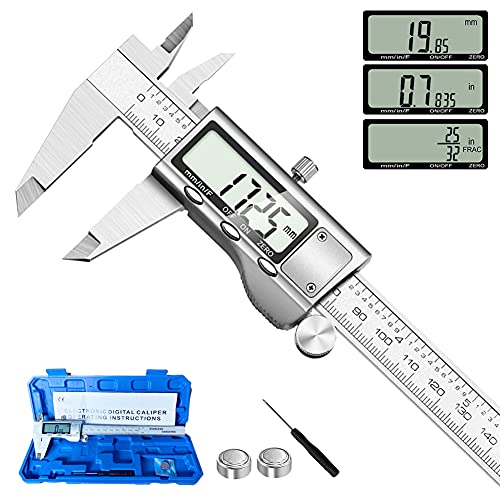
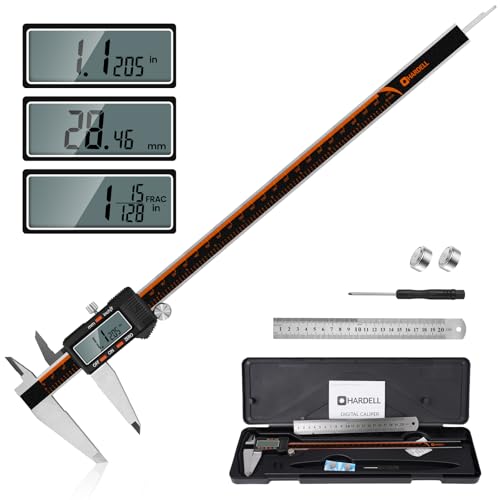
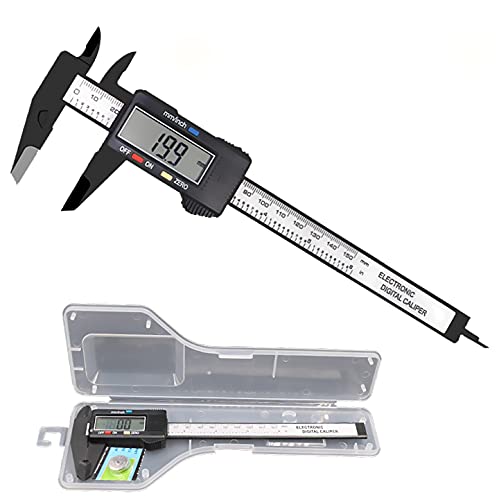
Digital calipers are the most popular choice for both hobbyists and professionals. They feature an easy-to-read LCD display that shows the measurement instantly. Some advanced models can connect to your smartphone or computer for data logging, making them ideal for quality control and repeatable setups. They are incredibly user-friendly and often come with features like absolute zero setting and inch/millimeter conversion.
For most users in a home renovation or woodworking setting, digital calipers offer the best balance of accuracy, ease of use, and value. They are perfect for measuring thickness, diameter, and depth with precision down to 0.01mm or 0.0005 inches.
Dial Calipers
Dial calipers use a gear-and-rack mechanism to drive a dial indicator. They are known for their durability and precision. The dial makes it easy to visually compare measurements and identify the high or low points on a part, a feature that many machinists prefer. They don't require batteries, which is a significant advantage for those who work in the field or don't want to worry about power.
While they may take a little more practice to read than digital models, many professionals prefer the "feel" and reliability of a quality dial caliper, especially in environments where electronics might be less reliable.
Vernier Calipers
Vernier calipers are the classic, most traditional design. They use a graduated scale and a sliding vernier scale to determine measurements. While they are the least expensive and most durable option (no batteries, fewer moving parts), they require the most skill to read accurately.
For the beginner or casual DIYer, the time and effort needed to master reading a vernier scale may not be worth it compared to the convenience of digital or dial calipers. However, they are an excellent choice for those on a tight budget or for use in harsh conditions where other calipers might be damaged.
Key Features to Consider When Buying Calipers
When shopping for calipers, several factors determine their quality and suitability for your tasks. Here's what to look for:
- Accuracy and Resolution: Look for a resolution of 0.01mm or 0.0005 inches for most precision work. Higher-end models may offer 0.001mm resolution. Accuracy is usually stated as ±0.02mm or better.
- Measuring Range: The most common range is 0-6 inches (150mm), which covers the vast majority of DIY and workshop applications. However, 8-inch (200mm) and 12-inch (300mm) versions are also available for larger projects, such as those involving deck building or larger furniture.
- Material and Build Quality: High-quality calipers are made from stainless steel or hardened stainless steel for durability and resistance to wear. Look for a smooth sliding action and a solid, non-slip feel.
- Measuring Surfaces: Ensure the jaws are flat, smooth, and parallel for accurate readings. The outer jaws are for external measurements, the inner jaws for internal, and the depth rod for depth.
- Display and Ease of Reading: For digital calipers, a large, clear LCD screen is crucial. Dial calipers should have a clearly marked dial. For vernier, ensure the scale is easy to read.
- Durability and Protection: Some calipers offer IP54 protection against dust and water, which is essential for use in wet or dirty environments.
- Data Output and Connectivity: Many digital calipers now feature USB or Bluetooth connectivity for recording measurements directly into software, a huge benefit for professionals.
Frequently Asked Questions About Calipers
What is the most accurate type of caliper?
All three types can be highly accurate. However, digital and high-quality dial calipers offer the finest resolution (0.01mm/0.0005 inches). The accuracy depends more on the quality and calibration of the tool than the type.
Can I use calipers to measure depth?
Yes, most calipers come with a depth rod that extends from the end of the tool. You can use this to measure the depth of holes, recesses, or steps.
How do I zero a digital caliper?
Close the jaws completely and press the "zero" or "set" button. This sets the current position as the reference point, allowing you to measure relative offsets or tare the device.
What is the difference between a caliper and a micrometer?
While both are precision measuring tools, micrometers are generally more accurate for measuring smaller distances (up to 1 inch or 25mm). Calipers have a much larger measuring range (6 inches or more) and can measure internal, external, and depth with one tool.
Are cheaper calipers worth buying?
For occasional, non-critical use, a cheaper caliper can be adequate. However, for any work where precision matters, it's worth investing in a reputable brand. The reliability and accuracy of a higher-quality tool can make a significant difference to your project's success.