Tape Measures: The Complete Buying Guide for Accurate Measurements
A tape measure is one of the most-used tools in any toolbox, yet choosing the right one can dramatically improve accuracy, speed, and comfort on every project. This guide breaks down blade width, standout, locking mechanisms, and specialty options so you can measure with confidence.
VIEW TOP TAPE MEASURESWhy Tape Measures Matter: Whether you are framing a wall, hanging a picture, or laying out a deck, the tape measure is the tool you reach for most. A quality tape measure delivers consistent accuracy, reduces measurement errors, and stands up to daily job-site abuse. This guide explains what separates an entry-level tape from a premium one, so you can match the tool to your workflow.
Anatomy of a Tape Measure: Key Components
A tape measure looks simple from the outside, but several precision components work together to deliver reliable measurements. Understanding each part helps you evaluate quality when comparing models on the shelf or online.
The case houses the retraction spring and protects the blade. Quality cases use impact-resistant ABS plastic or rubber overmolds. The blade is a thin strip of spring steel with a protective coating — matte nylon coatings reduce glare, while polyester coatings resist abrasion. The hook at the end is intentionally loose; this allows it to compensate for its own thickness during inside and outside measurements. A locking mechanism holds the blade at the desired extension, and a belt clip or lanyard loop keeps the tool accessible.
Understanding these parts helps you spot quality differences. For a broader look at how hand tools are constructed, see our tool basics guide, which explains terminology and construction standards across common workshop tools.
Blade Width and Standout: The Core Trade-Off
Blade width is the single most important specification when choosing a tape measure. Standard blades are 1 inch wide; heavy-duty and professional blades measure 1-1/4 inches or more. Wider blades resist twisting and extend farther before collapsing — a property called standout.
Entry-level tapes typically offer 6 to 7 feet of standout, which is adequate for indoor layout and short spans. Mid-range models commonly reach 8 to 10 feet, making them suitable for framing and deck work. Premium tapes with wider blades can achieve 11 to 13 feet of standout, allowing one-person measuring across rooms or open framing without a helper.
There is a trade-off: wider blades and longer standout add weight and bulk. For trim work, cabinet installation, and tight spaces, a compact 1-inch blade is easier to handle. For rough framing and outdoor projects, the extra rigidity of a wide blade pays off. If your work spans both worlds, consider owning one compact tape and one heavy-duty tape rather than compromising on a single model. Pairing the right tape with reliable stud finders and laser levels creates a measurement kit that covers nearly every layout task.
Locking Mechanisms and Retraction Control
The locking mechanism determines how smoothly you can extend, hold, and retract the blade. Most tape measures use a sliding thumb lock, but the quality of the lock varies significantly across price tiers.
Entry-level tapes use simple friction locks that may slip under tension or release abruptly. Mid-range tapes add positive-lock mechanisms that hold firmly and release smoothly with a thumb slide. Premium tapes often feature auto-lock or blade-brake systems: the blade stays extended until you press a release button, which prevents snap-back injuries and speeds up repeated measurements.
Retraction control is equally important. A tape that snaps back at full speed can whip the hook into the case, damaging the blade and posing a safety hazard. Better tapes use damped retraction that slows the blade near the end of travel. When evaluating a tape, extend it fully and let it retract — the motion should feel controlled, not violent. Our safety first guide covers additional precautions for hand-tool use on the job site.
Markings, Gradations, and Dual Scales
Readability under real-world conditions separates a frustrating tape from a dependable one. Look for bold, high-contrast markings with 1/16-inch gradations on the first foot. Some tapes highlight stud marks at 16-inch and 19.2-inch intervals, which speeds up framing layout considerably.
Dual-scale tapes print imperial on one edge and metric on the other. This is valuable for woodworking and cabinetry projects that mix measurement systems, and for anyone working from imported plans. Consider whether you prefer markings printed directly on the blade coating or engraved — printed markings are easier to read but can wear off with heavy use, while engraved markings last longer but are sometimes harder to see in low light.
Blade coatings also affect readability. Matte nylon coatings reduce glare outdoors and under bright shop lighting, while glossy coatings can reflect light and obscure the graduations. For detail work that requires precise layout, combine a quality tape with a utility knife for clean marking cuts and a fastener selection guide to keep your layout consistent from mark to installation.
Durability, Case Design, and Drop Protection
Tape measures live hard lives. They get dropped from ladders, tossed into tool bags, and dragged across concrete. Case design determines how well the internal spring and blade survive that abuse.
Entry-level cases are thin ABS plastic that may crack on impact. Mid-range cases add rubber overmolds at the corners and edges, absorbing shock and improving grip. Premium cases use reinforced frames, metal belt clips, and sealed construction that keeps dust and moisture away from the retraction mechanism.
Blade durability matters too. Nylon-coated blades resist abrasion and corrosion better than uncoated steel. Wide blades with reinforced hooks tolerate repeated hooking and pulling without bending. If you work in wet or dusty environments, look for tapes with sealed cases and corrosion-resistant blades. For tool organization that protects your measuring tools between jobs, see our tool storage ideas.
Specialty Tape Measures: Laser, Digital, and Long-Reach
Traditional tape measures remain essential, but specialty measuring tools extend what you can measure and how quickly you can do it.
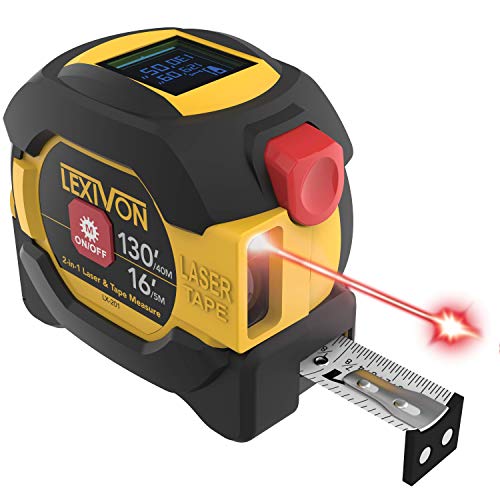
Laser measures fire a beam to a target and calculate distance electronically. They excel at long spans, high ceilings, and hard-to-reach locations where a tape cannot extend. However, they cannot replace a tape for marking and layout, and they require a clear line of sight. Most professionals treat laser measures as a complement, not a replacement.
Digital tape measures combine a traditional blade with an electronic readout, eliminating the need to read small graduations and allowing unit conversion at the press of a button. They suit cabinetmakers and finish carpenters who work with mixed units.
Long-reach and surveyor tapes extend 100 feet or more for site layout, fencing, and landscaping. These are open-reel designs without a retraction spring, and they are used differently from standard tapes. For outdoor layout projects, they pair well with retaining wall planning and walkway and path layout guides.
Quality Tiers: Entry-Level, Mid-Range, and Premium
Describing tape measures by quality tier rather than price helps you compare models objectively and keeps recommendations relevant over time. The tiers below reflect relative market position, not absolute numbers.
Entry-Level
Budget-friendly tapes suited to light household tasks, occasional craft projects, and basic measuring. They typically offer 1-inch blades with 6-7 feet of standout, friction locks, and standard ABS cases. Accuracy is adequate for picture hanging and furniture placement, but these tapes may not survive heavy job-site use.
Mid-Range
Affordable to mid-priced tapes that balance durability and performance. Expect 1-1/4 inch blades, 8-10 feet of standout, positive-lock mechanisms, rubber-overmolded cases, and nylon-coated blades. This tier suits most DIYers, remodelers, and trade apprentices for everyday framing, decking, and renovation work.
Premium
High-end tapes built for daily professional use. Features include wide blades with 11-13 feet of standout, auto-lock or blade-brake systems, sealed reinforced cases, metal belt clips, and dual-scale markings with high-contrast coatings. These tapes deliver consistent accuracy under hard use and are the choice for framers, carpenters, and contractors.
Choose the tier that matches your workload. A homeowner who measures occasionally will be well served by an entry-level or mid-range tape, while a professional who measures hundreds of times a day should invest in premium reliability. The same tier logic applies when comparing tools like table saws or routers.
How to Choose the Right Tape Measure for Your Projects
Use this practical checklist to narrow your options before buying:
- Match blade width to your work. Choose a 1-inch blade for trim, cabinetry, and tight spaces; a 1-1/4 inch blade for framing, decking, and long spans.
- Verify standout for one-person measuring. Measure how far the blade extends before collapsing. If you frequently measure across rooms or open framing, target 8 feet or more.
- Test the lock and retraction. A positive lock should hold firmly and release smoothly. Retraction should be controlled, not violent.
- Check readability in your environment. If you work outdoors, choose a matte-coated blade with high-contrast markings.
- Consider dual scales. If your plans or projects mix imperial and metric units, a dual-scale tape saves conversion time.
- Plan for complementarity. Many professionals carry a compact tape and a heavy-duty tape, plus a laser measure for long spans.
Once you have a tape measure, practice consistent technique: hook the end squarely, keep the blade straight, and read from directly above the graduations. Combine these habits with a tool storage system that keeps measuring tools protected and accessible, and you will reduce errors on every project.
Tape Measure Maintenance and Care Tips
A few simple habits extend the life of any tape measure:
- Retract slowly. Guide the blade back into the case instead of letting it snap. This prevents hook and blade damage.
- Wipe the blade. After use in dusty or wet conditions, extend the blade and wipe it clean before retracting.
- Avoid extreme heat. Leaving a tape on a dashboard or near a heater can distort the blade and weaken the spring.
- Do not use the blade as a pry bar. The hook is designed for measuring, not prying or scraping.
- Store it properly. Hang the tape by its belt clip or lanyard loop to keep the blade and spring relaxed.
For related maintenance guidance across hand tools, see our rust removal and tool storage ideas guides.
Frequently Asked Questions
What is the most important feature of a tape measure?
Accuracy and blade standout are the two most critical features. A tape measure must provide consistent, precise measurements, while adequate standout length allows one-person measuring across open spans.
What blade width should I choose for a tape measure?
A 1-inch blade is suitable for general DIY tasks and fits comfortably in most hands. For professional framing, decking, or long-span measuring, a 1-1/4 inch blade offers better standout and rigidity.
Are laser measures a good alternative to traditional tape measures?
Laser measures excel at long-distance and hard-to-reach measurements, but they cannot replace tape measures for marking, layout, and short precise cuts. Most professionals carry both.
How do I maintain my tape measure for long life?
Retract the blade slowly to prevent snapping, wipe the blade clean after use in dusty environments, avoid dropping the case on hard surfaces, and store the tool in a dry location.
Ready to Choose Your Next Tape Measure?
Browse our recommended tape measures below, selected for accuracy, durability, and value across entry-level, mid-range, and premium tiers.
SEE RECOMMENDED TAPE MEASURES