Workshop Lighting: The Complete Guide to Illuminating Your Shop
Discover how to choose the right lighting for safety, precision, and comfort in your workshop — from ambient LED panels to focused task lamps.
Jump to Buying GuideWhy Workshop Lighting Matters: Poor lighting is one of the most overlooked hazards in a home workshop. It causes eye strain, hides measurement errors, increases accident risk, and makes even simple projects frustrating. The right lighting setup transforms your workspace into a safer, more productive environment — whether you are building furniture, repairing electronics, or restoring a vehicle.
Understanding Workshop Lighting Requirements
Workshop lighting is not simply about brightness. It is about layering light sources to eliminate shadows, reduce glare, and maintain color accuracy. A well-planned lighting scheme considers three key metrics: illuminance (measured in lux), color temperature (measured in Kelvin), and color rendering index (CRI).
Illuminance: How Bright Is Bright Enough?
Illuminance describes the amount of light falling on a surface. For workshops, the recommended levels vary by task:
- General ambient lighting: 300–500 lux for walking, storage, and rough layout work.
- Standard workshop tasks: 500–750 lux for assembly, measuring, and machine operation.
- Precision work: 750–1,000 lux for woodturning, electronics soldering, and fine finishing.
- Inspection-level tasks: 1,000+ lux for quality control or detailed restoration.
Color Temperature: Matching Daylight for Accuracy
Color temperature affects how you perceive materials and finishes. A range of 4000K to 5000K — often called "cool white" or "neutral white" — is the sweet spot for workshops. It closely mimics natural daylight, helps distinguish subtle color differences in wood grain and paint, and keeps you alert during long sessions. Warmer lighting (2700K–3000K) is better suited to lounges and living spaces, not workspaces.
Color Rendering Index (CRI): Seeing True Colors
CRI measures how accurately a light source reveals colors compared to natural sunlight. Look for fixtures with a CRI of 90 or higher. High-CRI lighting is especially important if you work with stains, paints, wiring color codes, or automotive finishes. A low-CRI light can make a red wire look brown or a walnut finish look muddy.
Pro Tip: Combine ambient ceiling fixtures with adjustable task lamps. Ambient light fills the room evenly, while task lighting lets you direct intense, shadow-free light exactly where your hands are working.
Workshop Lighting Types Compared
Different lighting technologies serve different purposes. The table below compares the most common workshop lighting options by tier, category, and best use case. No numeric figures are used — descriptors reflect relative market positioning.
| Lighting Type | Tier | Best For | Key Characteristics |
|---|---|---|---|
| LED Shop Lights (linear) | Premium | General ambient lighting | High efficiency, low heat, long lifespan, instant-on, linkable |
| LED Panel Lights | Mid-Range | Even ceiling illumination | Uniform light distribution, slim profile, flicker-free drivers |
| Fluorescent Tube Fixtures | Entry-Level | Basic ambient light | Widely available, lower initial outlay, contain mercury, slower warm-up |
| Adjustable Task Lamps | Mid-Range | Focused work areas | Articulating arms, clamp or magnetic base, directional beam |
| Magnetic Strip Lights | Premium | Machine and tool mounting | Tool-free attachment, flexible positioning, USB or battery powered |
| High-Bay LED Fixtures | Professional-Grade | Large or tall shops | High output, wide beam angles, durable housings, commercial-grade |
| Portable Work Lights | Entry-Level | Temporary or mobile tasks | Rechargeable, rugged casing, stand or hook mount, weather-resistant |
| Explosion-Proof Fixtures | Professional-Grade | Flammable or dusty environments | Sealed housings, spark-free construction, certified for hazardous zones |
Workshop Lighting Buying Guide
Choosing the right workshop lighting involves more than picking the brightest fixture on the shelf. Use the following criteria to match lighting to your specific workspace and tasks.
1. Assess Your Space and Layout
Measure your workshop's square footage and ceiling height. Low ceilings (under 2.4 meters) suit flush-mount LED panels and linear strip lights. Taller ceilings (2.7 meters and above) benefit from suspended linear fixtures or high-bay LEDs that spread light over a wider area. Consider the position of workbenches, machines, and storage — light should reach every zone without forcing you to squint.
2. Layer Your Lighting
A single overhead fixture rarely provides adequate illumination. Professional shops use a three-layer approach:
- Ambient layer: Ceiling-mounted LED panels or linear shop lights for overall visibility.
- Task layer: Adjustable arm lamps or magnetic strip lights positioned close to your work.
- Accent layer: Small directional lights for inspection, measurement, or detail work.
3. Prioritize Flicker-Free, High-CRI LEDs
Cheaper LED drivers can produce flicker that is invisible to the eye but causes headaches and fatigue over time. Look for fixtures advertised as flicker-free with a high CRI (90+). If you work with electronics or fine mechanics, a dimmable LED driver is a worthwhile investment — it lets you adjust intensity without changing color temperature.
4. Consider Heat and Safety
Traditional incandescent and halogen bulbs waste most of their energy as heat — a serious concern in small or enclosed shops. LEDs run far cooler, reducing fire risk and keeping your workspace comfortable. In dusty environments, choose fixtures with sealed or gasketed housings to prevent dust buildup inside the lens. If you store solvents or fine combustible dust, explore explosion-proof fixtures rated for hazardous locations.
5. Plan for Flexibility
Your workshop layout may evolve. Linkable LED shop lights let you chain multiple fixtures from a single outlet. Magnetic strip lights can be repositioned as tools move. Portable rechargeable work lights are invaluable when you need light under a car hood or inside a cabinet. Build flexibility into your lighting plan from day one.
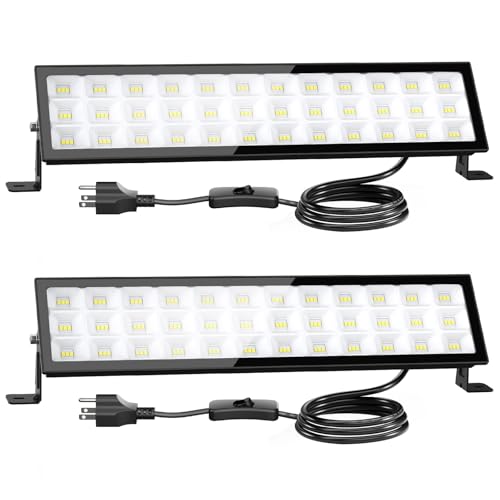
Budget-Neutral Tip: Start with a pair of linkable LED shop lights for ambient coverage, then add one or two adjustable task lamps at your primary workbench. This layered approach delivers professional-grade visibility without overbuilding your initial setup.
Workshop Lighting by Tier: What to Expect
Understanding market tiers helps you match expectations to features. The descriptors below are relative and not tied to any numeric figures.
| Tier | Typical Characteristics | Ideal For |
|---|---|---|
| Entry-Level | Basic on/off control, standard CRI, plastic housings, shorter warranties | Occasional DIYers, temporary setups, backup lighting |
| Mid-Range | Flicker-free drivers, CRI 90+, linkable designs, metal housings, dimmable options | Regular home workshops, dedicated hobby spaces |
| Premium | High CRI, precise dimming, rugged construction, extended warranties, smart controls | Serious DIYers, small professional shops, precision work |
| Professional-Grade | Commercial certifications, high output, sealed housings, hazardous-location ratings | Commercial workshops, industrial settings, large garages |
For most home workshops, mid-range LED fixtures offer the best balance of performance and durability. Premium and professional-grade tiers make sense when you work daily, handle precision tasks, or need certified safety ratings.
Frequently Asked Questions
What type of lighting is best for a workshop?
LED lighting is the top choice for workshops due to its high energy efficiency, bright and consistent output, low heat emission, and long lifespan. For detailed tasks, combine ambient LED fixtures with focused task lighting such as adjustable arm lamps or magnetic strip lights.
How many lumens do I need for workshop lighting?
For general workshop tasks, aim for 300 to 500 lumens per square meter. For precision work like woodturning, electronics, or detailed assembly, increase to 700 to 1,000 lumens per square meter. Layering ambient and task lighting ensures even, shadow-free illumination.
What color temperature is ideal for a workshop?
A color temperature between 4000K and 5000K is ideal for workshops. This cool-white range mimics daylight, improves visibility of fine details, reduces eye strain, and helps maintain alertness during long projects without the harshness of very cool 6000K+ lighting.
Do I need explosion-proof lights in my workshop?
Explosion-proof fixtures are necessary only if your workshop stores or uses flammable vapors, fine combustible dust, or solvents in enclosed spaces. For typical woodworking, metalworking, or general DIY shops, standard LED fixtures with proper enclosures are sufficient.
Continue Planning Your Workshop
Lighting is just one part of a well-organized workspace. Explore these related guides to complete your setup:
- Build a sturdy foundation with these workbench plans designed for real workshop use.
- Organize your space efficiently with practical tool storage ideas and wall-mounted solutions.
- Learn how to clean and maintain power tools so they last for years.
- Explore wood selection basics to choose the right lumber for your next project.
- Plan a full whole-house renovation and see how workshop upgrades fit into the bigger picture.
Ready to Light Up Your Workshop?
Browse our curated selection of workshop lighting fixtures and find the right setup for your space.
View Recommended Lighting