Laser Levels: The Complete Guide to Precision Leveling
Discover how laser levels can transform your accuracy on every project. Learn about line lasers, rotary lasers, self-leveling features, and the specifications that matter most before you buy.
SEE RECOMMENDED LASER LEVELSWhy laser levels matter: A laser level projects a perfectly straight reference line or plane across a room or job site, eliminating guesswork and reducing costly errors. Whether you are hanging cabinets, installing a drop ceiling, laying tile, or grading a yard, a laser level helps you work faster and with professional-grade precision. This guide explains the types, key specifications, and practical buying considerations so you can choose the right model for your projects.
What Is a Laser Level?
A laser level is a precision instrument that projects one or more laser beams onto surfaces to establish accurate horizontal, vertical, or angled reference lines. Instead of relying solely on bubble vials or chalk lines, you can see a bright, straight line across an entire wall or room. This makes it indispensable for tasks that demand consistency over long distances, such as aligning electrical outlets at the same height, installing a chair rail around a room, or ensuring a deck frame is perfectly level.
Modern laser levels range from compact, budget-friendly cross-line units designed for indoor DIY use to rugged rotary models that professionals rely on for large-scale outdoor site work. Many now include self-leveling mechanisms, green beam technology for enhanced visibility, and mounting accessories that let you attach the unit to a tripod or wall bracket. For related workshop and measurement tools that pair well with a laser level, explore our tools and equipment category.
Types of Laser Levels
Laser levels are generally grouped by how they project the beam and the application they are designed for. Understanding these categories will help you narrow your choices quickly.
1 Cross-Line Laser
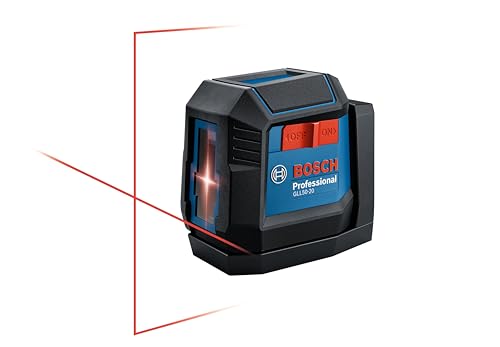
Projects one horizontal and one vertical line that cross at 90 degrees. Ideal for indoor tasks like hanging pictures, installing shelves, tiling, or aligning cabinets. Most cross-line models are compact, self-leveling, and designed for short to medium range use.
2 Multi-Line Laser
Projects multiple lines simultaneously — often a horizontal line plus two or more vertical lines, or full 360-degree horizontal coverage. These are versatile for room layout, framing, and drywall installation where several reference lines are needed at once.
3 Rotary Laser
Spins a single beam rapidly to create a 360-degree horizontal plane. Used for large-area leveling such as grading, laying patios, setting fence posts, or checking ceiling heights across big rooms. Often paired with a detector for outdoor use.
4 Dot Laser
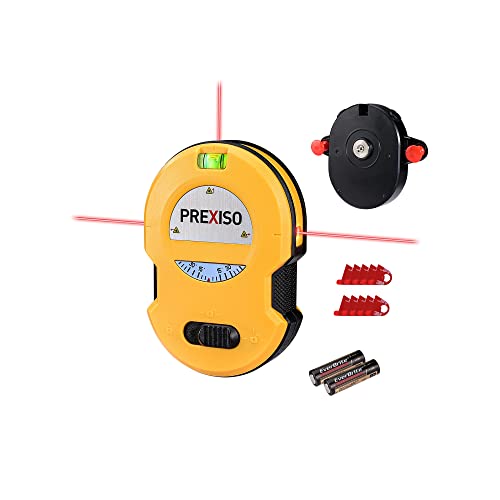
Projects individual points rather than lines. Useful for tasks like transferring a point from floor to ceiling (plumbing) or marking stud locations. Dot lasers are compact and often combined with line projection in multi-function models.
5 Pipe & Alignment Lasers
Specialized units designed for aligning pipes, conduit, or drainage systems. These often mount inside or on pipes and project a beam along the centerline. Less common for general DIY but essential for plumbing and mechanical trades.
6 Torpedo Laser
A compact, pocket-sized laser that resembles a torpedo level. Good for quick checks and short-range tasks where portability matters more than long-distance accuracy. Often entry-level and budget-friendly.
Key Specifications Explained
When comparing laser levels, a few core specifications determine performance, durability, and suitability for your work. Understanding these numbers will help you interpret product descriptions with confidence.
- Accuracy: Usually expressed as plus or minus a fraction of an inch per 30 feet. Entry-level units often specify around ±1/8 inch per 30 feet, while mid-range and premium models tighten this to ±1/16 inch or better. Tighter accuracy matters most for long-distance or high-precision work.
- Self-Leveling Range: The degree of tilt a self-leveling laser can correct automatically — commonly ±3 to ±5 degrees. If the unit is tilted beyond this range, it will typically flash a warning and stop projecting to prevent inaccurate lines.
- Working Range: The maximum distance over which the beam remains visible (or detectable). Indoor line lasers often reach 30–50 feet, while rotary lasers with detectors can cover hundreds of feet outdoors.
- Beam Color: Red beams are common and generally more affordable. Green beams are up to four times more visible to the human eye, which helps in brightly lit rooms and outdoor settings, though green models typically sit at a higher tier in the lineup.
- Laser Class: Class 2 lasers are standard for consumer and professional levels. They are safe for incidental exposure but should never be pointed at eyes. Always follow the manufacturer's safety instructions.
- IP Rating: Indicates dust and water resistance. An IP54 rating is common for job-site-ready models, protecting against limited dust and splashes. Higher IP ratings offer more robust protection for harsh environments.
- Power Source: Most units run on AA batteries, rechargeable lithium-ion packs, or both. Rechargeable models reduce long-term battery waste and are common in mid-range and premium tiers.
- Mounting Options: Look for a 1/4-inch or 5/8-inch tripod thread, a magnetic bracket, or a wall mount. Good mounting accessories make it far easier to position the laser precisely.
Line vs. Rotary: Which Do You Need?
The choice between a line laser and a rotary laser depends largely on the scale of your projects and whether you work mostly indoors or outdoors.
Line Lasers Are Best For:
- Indoor remodeling and renovation
- Hanging cabinets, shelves, and pictures
- Tiling walls and floors
- Installing trim, chair rails, and wainscoting
- Framing and drywall layout
- Electrical outlet and switch alignment
Rotary Lasers Are Best For:
- Outdoor grading and site leveling
- Setting fence posts and deck piers
- Laying patios and driveways
- Checking ceiling heights in large rooms
- Long-distance elevation transfer
- Excavation and drainage work
Many DIYers start with a cross-line laser because it covers the widest range of indoor tasks at an affordable tier. If you regularly work on landscaping or large outdoor projects, a rotary laser — often paired with a detector — becomes the more practical choice. Some enthusiasts eventually own both, using the line laser indoors and the rotary outdoors.
Red vs. Green Beams: Visibility Trade-Offs
Beam color is one of the most practical decisions you will make. Red laser diodes are mature, reliable, and widely used across all tiers. Green laser diodes have become more common and offer significantly better visibility to the human eye — particularly in bright ambient light.
If you work mostly in dim basements or during evening hours, a red beam is perfectly adequate and typically sits in the entry-level or mid-range tier. If you work in sunlit rooms, near windows, or outdoors, a green beam will save you time and frustration, though it generally represents a step up in tier. Keep in mind that green models may consume slightly more power, so battery life can be marginally shorter than comparable red units.
Buying Tips & Checklist
Before you decide, run through this checklist to make sure the laser level you choose matches your actual workflow.
- Match the type to your tasks: A cross-line laser covers most indoor DIY needs. Choose a rotary model if large-area or outdoor leveling is a regular requirement.
- Prioritize self-leveling: Self-leveling saves setup time and reduces human error. Manual-leveling models are only worth considering if you need to project deliberate slopes or grades.
- Check accuracy against your needs: For cabinet installation and tiling, tighter accuracy is worth the investment. For rough framing, a wider tolerance is usually acceptable.
- Consider beam visibility: Green beams are easier to see in bright conditions. If your workspace is well lit, factor this into your decision.
- Verify mounting compatibility: Confirm the tripod thread size and whether a magnetic or wall mount is included. These accessories often make the difference between a frustrating and a smooth setup.
- Look at the IP rating: If the unit will travel to job sites or dusty environments, choose a model with at least IP54 protection.
- Plan for power: Rechargeable lithium-ion packs are convenient, but AA battery compatibility offers flexibility in a pinch. Many mid-range models support both.
- Don't overlook the case: A hard carrying case protects calibration and extends the life of the instrument, especially if you transport it frequently.
Comparison of Laser Level Types
The table below summarizes how the main categories compare across typical use cases, accuracy expectations, and feature tiers.
| Type | Best Use Case | Typical Accuracy | Visibility | Feature Tier |
|---|---|---|---|---|
| Cross-Line Laser | Indoor remodeling, shelving, tiling | ±1/8" to ±1/16" per 30 ft | Good indoors | Entry-Level to Mid-Range |
| Multi-Line Laser | Framing, drywall, room layout | ±1/8" to ±1/16" per 30 ft | Good to very good | Mid-Range to Premium |
| Rotary Laser | Outdoor grading, large-area leveling | ±1/16" to ±1/8" per 30 ft | Excellent with detector | Mid-Range to Premium |
| Dot Laser | Point transfer, plumbing, stud marking | ±1/8" to ±1/4" per 30 ft | Moderate | Entry-Level |
| Torpedo Laser | Quick checks, short-range tasks | ±1/8" to ±1/4" per 30 ft | Moderate | Entry-Level |
| Pipe & Alignment Laser | Plumbing, conduit, drainage alignment | Varies by application | Specialized | Mid-Range to Premium |
Frequently Asked Questions
Line lasers project fixed straight lines and are ideal for indoor tasks like hanging cabinets, installing shelves, or tiling. Rotary lasers spin a single beam 360 degrees to create a level plane across a large area, making them suitable for outdoor site work, grading, and long-distance leveling.
For most DIY projects, an accuracy of plus or minus 1/8 inch per 30 feet is acceptable. Professional-grade models often achieve plus or minus 1/16 inch per 30 feet or better. For short-range indoor tasks, a slightly wider tolerance is usually fine.
Self-leveling laser levels use a pendulum or electronic sensor to automatically find plumb and level, saving time and reducing setup errors. Manual models require you to adjust the unit by hand using built-in vials. Self-leveling models are generally recommended for their speed and ease of use.
Yes, but visibility is the main challenge. Standard red beams are hard to see in bright sunlight. Green beam lasers offer better outdoor visibility, and rotary lasers used with a detector can work over long distances in daylight.
The IP (Ingress Protection) rating indicates how well the device is sealed against dust and water. An IP54 rating means it is protected against limited dust ingress and water splashes, making it suitable for most job-site conditions. Higher ratings offer more robust protection.
Ready to Level Up Your Accuracy?
Browse our curated selection of laser levels suited to every tier — from entry-level cross-line models for home DIY to premium rotary lasers for demanding outdoor projects.
VIEW RECOMMENDED LASER LEVELS