Essential Tools Guide: Build Your DIY Toolkit with Confidence
From power drills to hand tools and safety gear — discover the must-have equipment for every home project. Start your DIY journey the right way.
Explore the ToolsWhy This Guide Matters: Whether you're fixing a leaky faucet, building a bookshelf, or renovating a room, having the right tools makes all the difference. This guide walks you through every essential category — so you can shop smart, work safely, and achieve professional results.
What Are the Essential Tools for DIY?
A well-rounded toolkit includes a mix of power tools, hand tools, and safety equipment. Below, we break down each category with recommendations, quality tiers, and practical advice.
Power Tools: The Backbone of Your Workshop
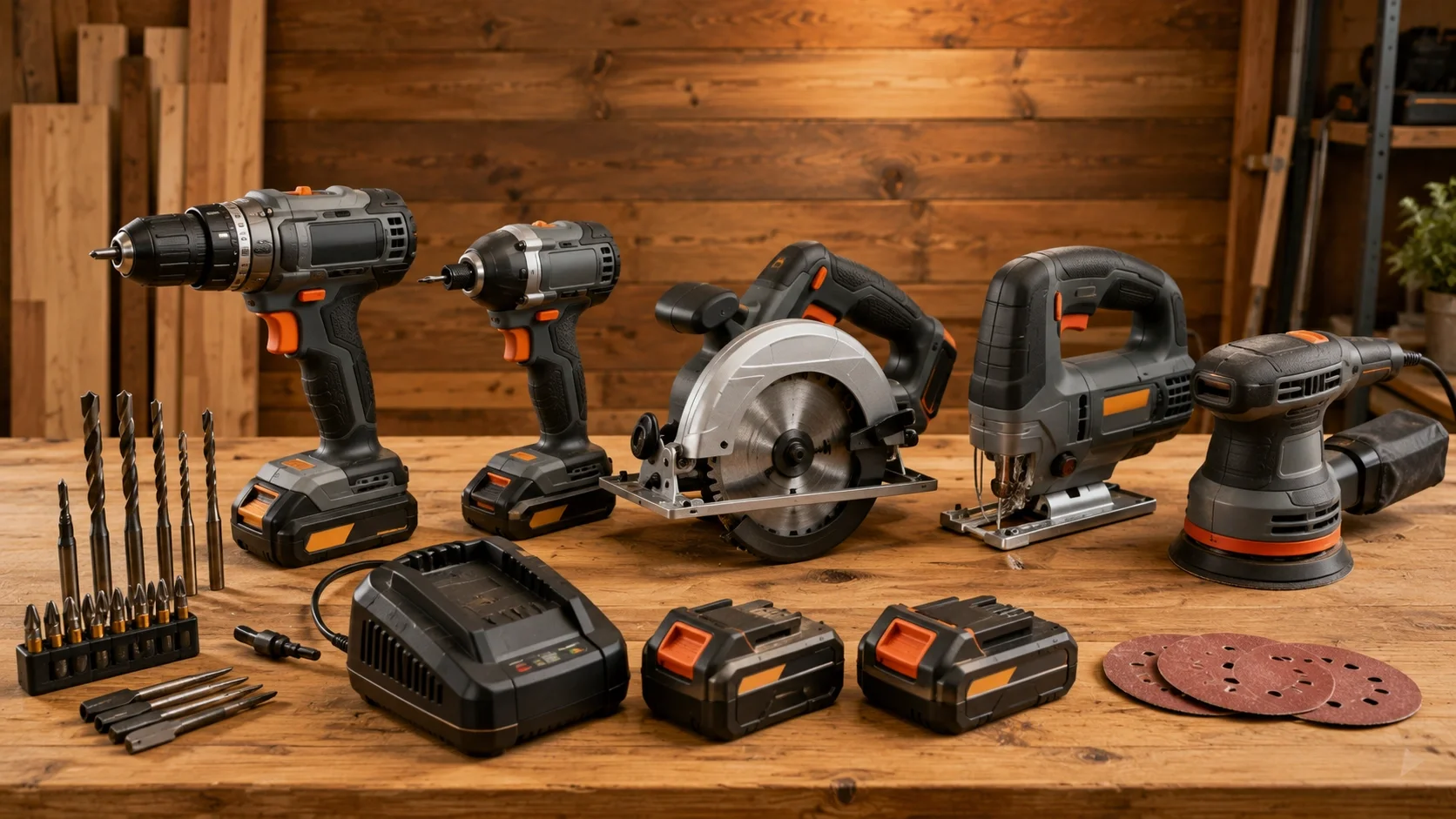
Power tools save time and effort. For most DIYers, a cordless drill is the first purchase. It's versatile enough for drilling holes and driving screws. Next, consider an impact driver for tougher fastening jobs, and a circular saw for straight cuts in wood and sheet materials.
- Cordless Drills: Look for 18V or 20V models with a brushless motor. Available across entry-level to premium tiers.
- Impact Drivers: Ideal for driving long screws and lag bolts. Ranges from budget-friendly to high-end.
- Circular Saws: A 7¼-inch model handles most cutting tasks. Mid-range options offer the best balance of power and control.
- Miter Saws: For precise angle cuts in framing and trim work. Premium models deliver smoother, more accurate cuts.
Hand Tools: Precision and Control
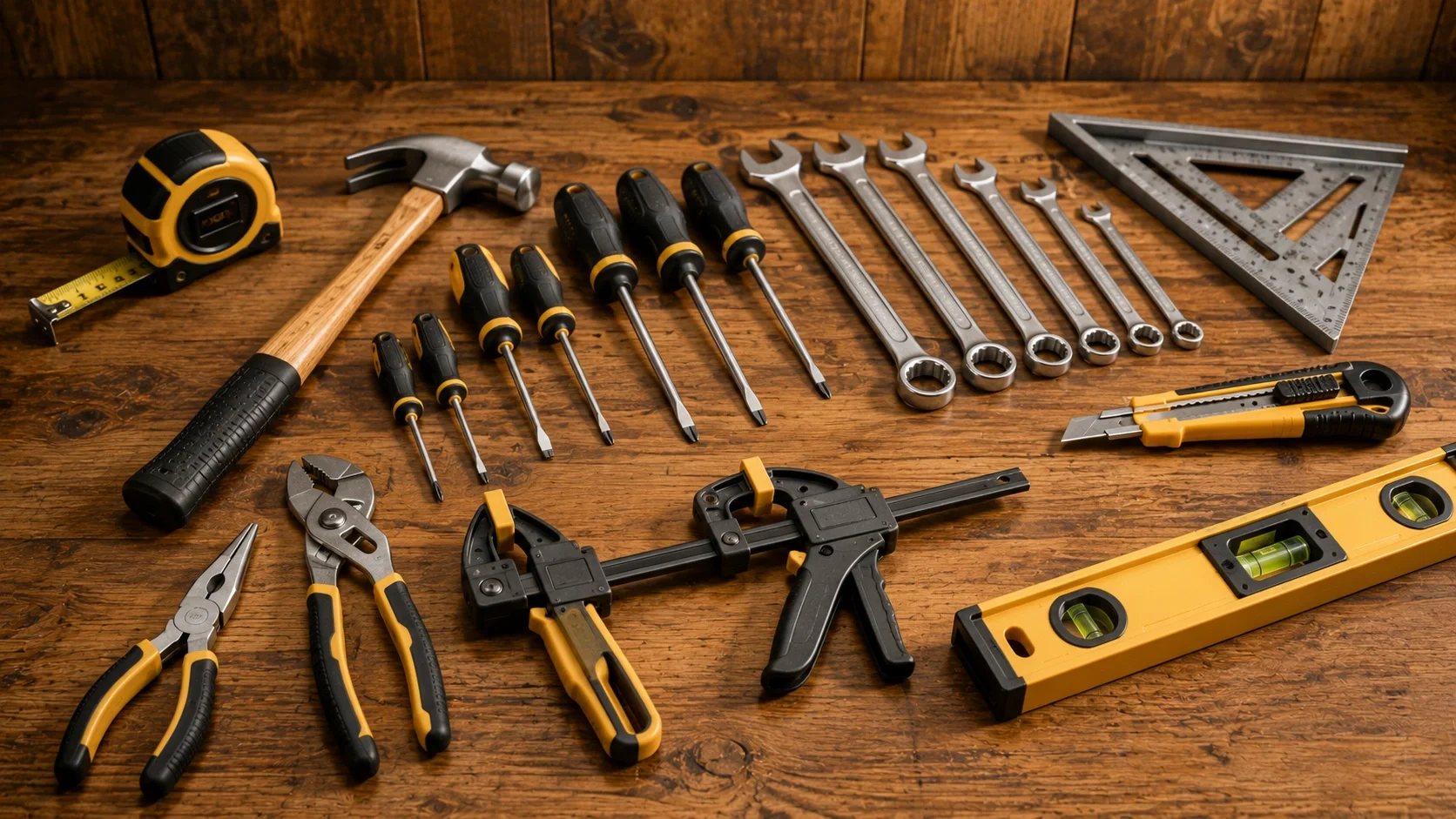
Hand tools are the unsung heroes of any workshop. They give you control for detailed work and are essential for tasks where power tools are overkill. Start with a quality tape measure, a hammer, and a set of screwdrivers.
- Tape Measures: 25-foot with a wide blade. Entry-level to mid-range options are widely available.
- Hammers: A 16 oz claw hammer is the standard. Affordable to premium versions exist.
- Screwdriver Sets: Look for sets with multiple bits. Mid-range sets offer the best variety.
- Wrenches: A combination wrench set (SAE & metric). High-end sets provide better grip and durability.
- Pliers: Needle-nose and slip-joint. Budget-friendly to mid-tier options work well for most tasks.
- Utility Knives: Retractable blades for cutting. Entry-level models are perfectly adequate.
- Clamps: Bar clamps or quick-grip clamps. Mid-range clamps offer better clamping force.
Don't forget a laser level for hanging pictures and aligning shelves — it saves time and reduces errors.
Painting & Finishing Tools
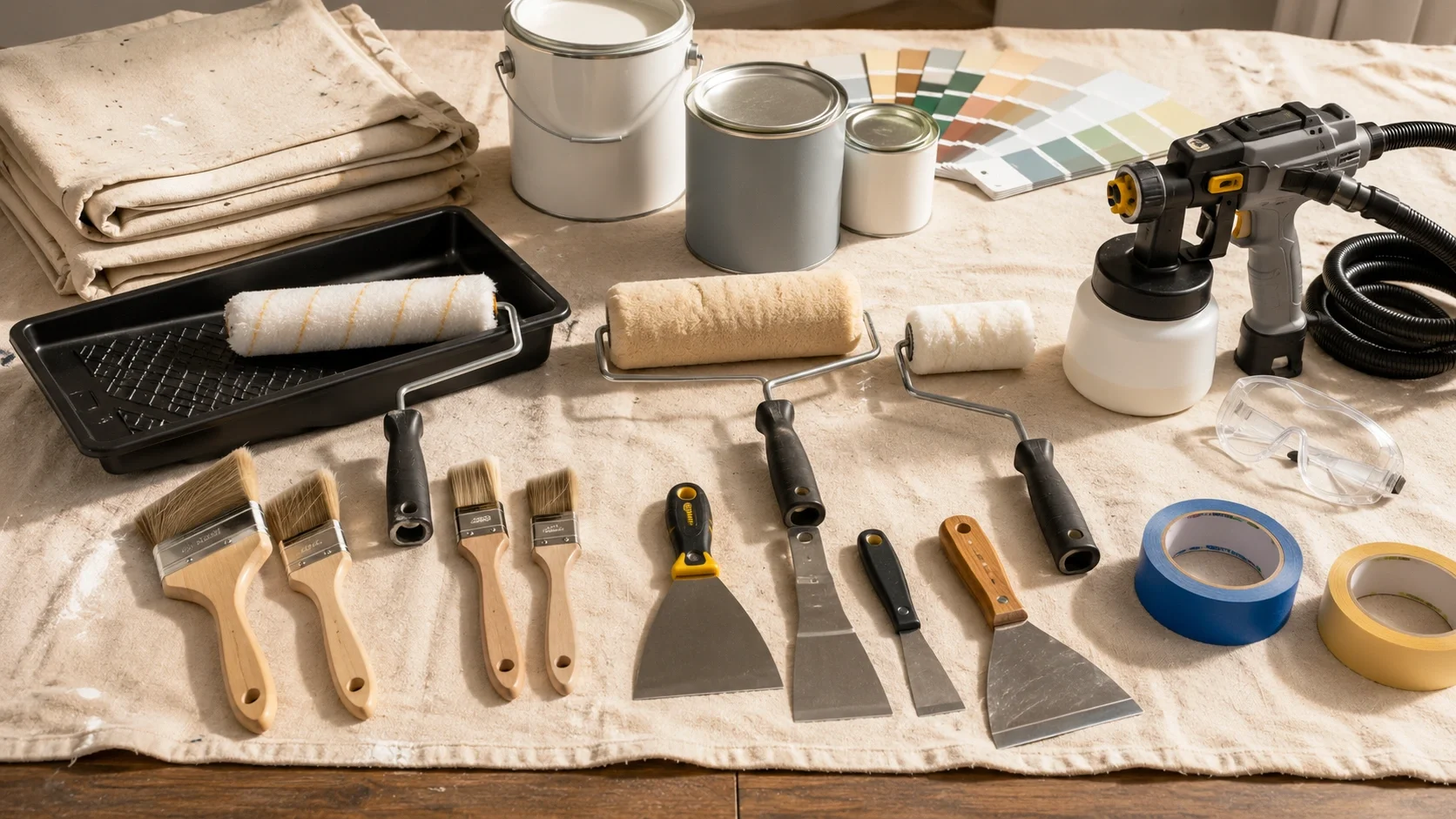
Whether you're refreshing a room or refinishing furniture, the right painting tools ensure a smooth, professional finish. Invest in good-quality brushes and rollers — they hold more paint and leave fewer streaks.
- Paint Brushes: Angled sash brushes for cutting in. Premium brushes hold their shape longer.
- Paint Rollers: 9-inch roller with covers for different surfaces. Mid-range covers offer good lint resistance.
- Paint Sprayers: For large projects or furniture. High-end sprayers provide finer atomization.
- Scrapers & Putty Knives: For prep work and patching. Entry-level tools are sufficient here.
And always have drop cloths and tape on hand to protect floors and trim.
Safety Gear: Protect Yourself
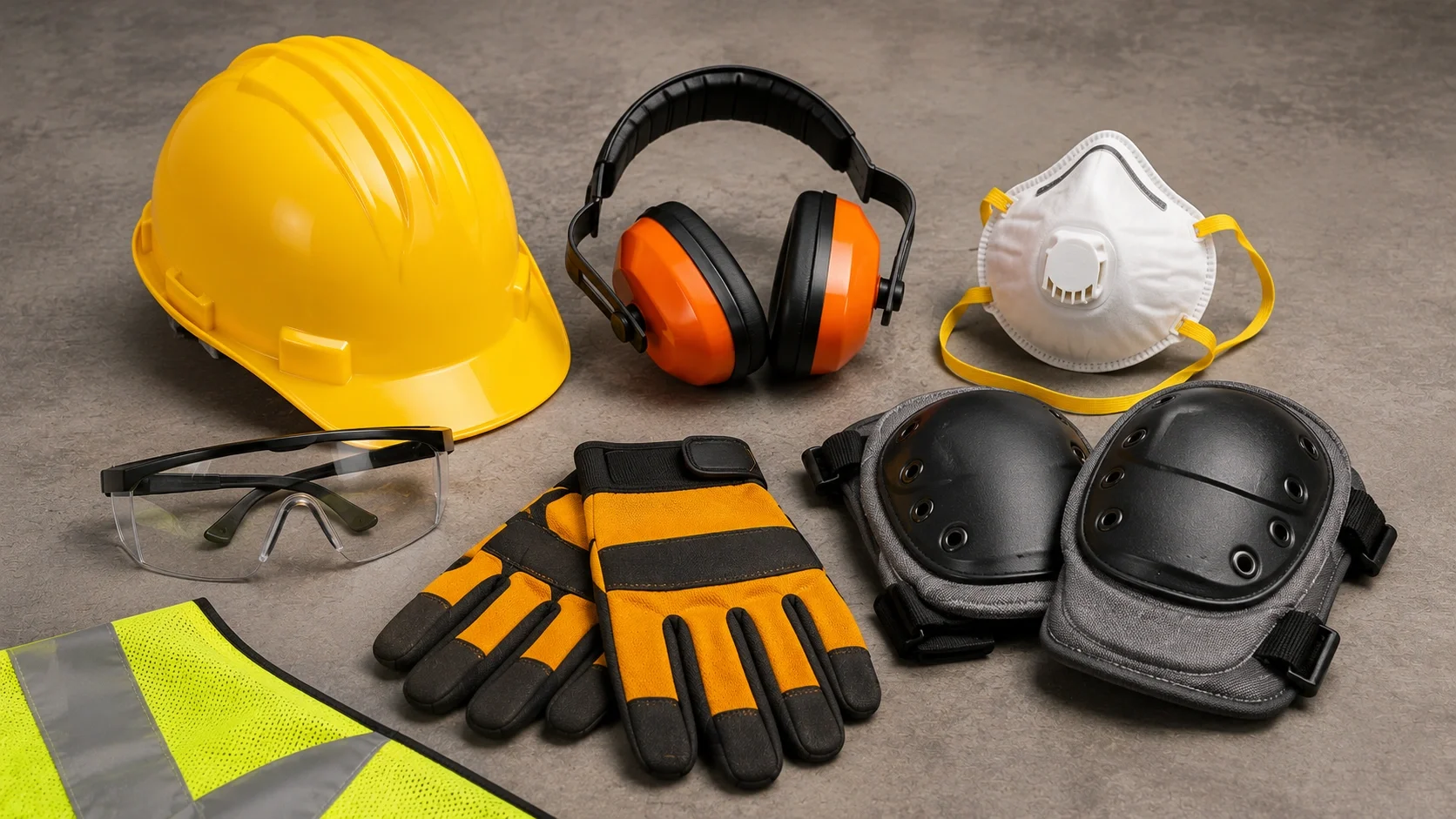
Safety should never be an afterthought. Safety glasses, work gloves, and ear protection are non-negotiable. A respirator is essential for dusty or fume-heavy jobs, and knee pads save your joints during flooring or landscaping work.
- Safety Glasses: Impact-resistant, with side shields. Affordable options meet basic safety standards.
- Work Gloves: Cut-resistant or general-purpose. Mid-range gloves offer better dexterity.
- Ear Protection: Earmuffs or earplugs. Entry-level to premium options available.
- Respirators & Masks: N95 or better for dust and vapors. Mid-range models provide a better seal.
- Knee Pads: Gel-filled for comfort. Premium pads offer superior long-term support.
Tool Care & Storage
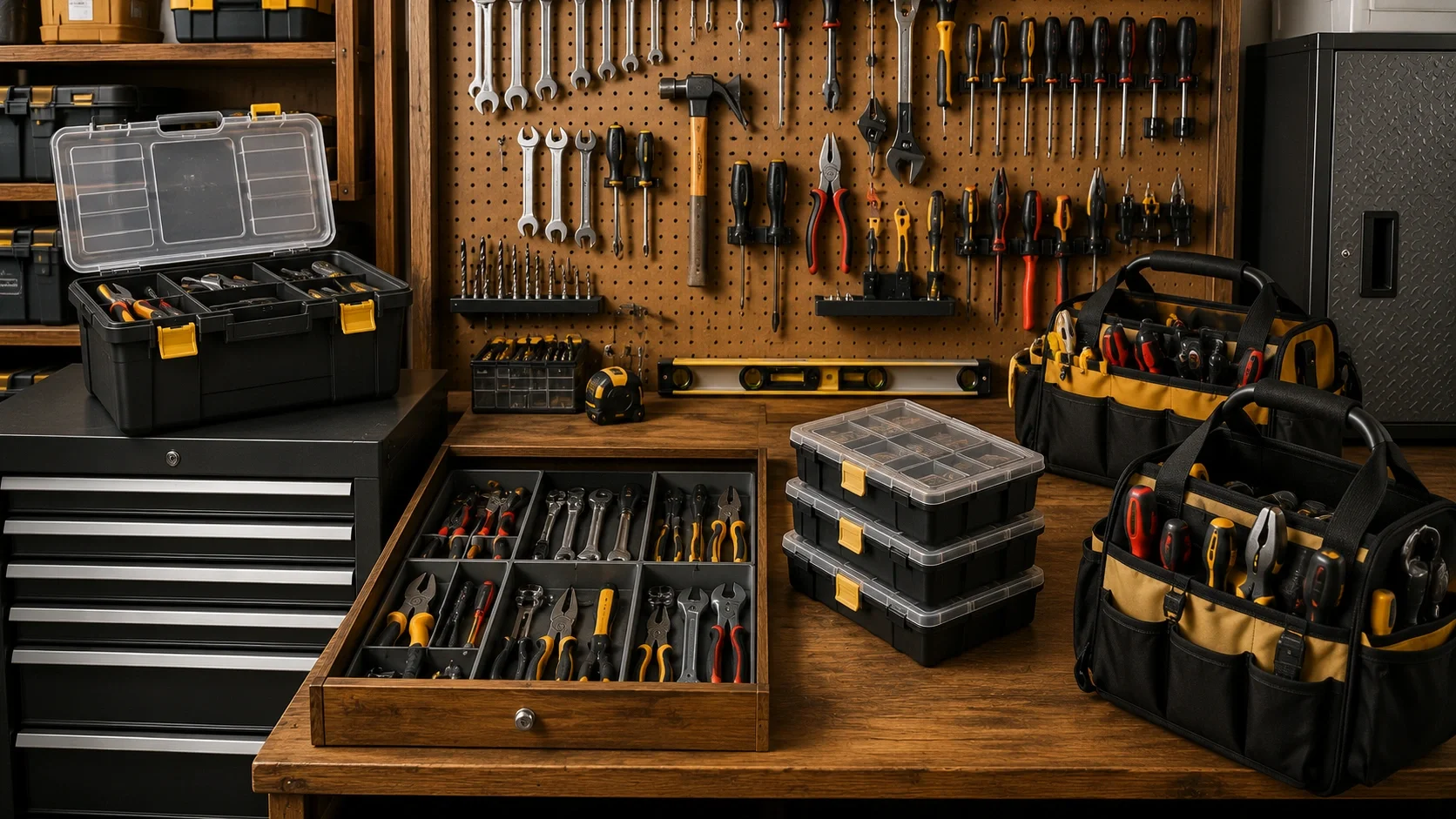
Proper maintenance extends the life of your tools. Cleaning power tools after each use, sharpening blades, and calibrating measuring tools are habits that pay off. Equally important is tool storage — keep them organized and protected.
- Clean Power Tools: Remove dust and debris regularly.
- Sharpen Tools: Keep chisels, plane irons, and saw blades sharp.
- Tool Calibration: Check levels and squares for accuracy.
- Rust Removal: Prevent rust with light oil and proper storage.
- Tool Storage: Cabinets, wall racks, or portable toolboxes.
- Workshop Lighting: Good lighting reduces mistakes.
For smaller spaces, check out our small shop ideas to maximize efficiency.
Brand Comparisons: Which One Is Right for You?
With so many brands available, it's easy to feel overwhelmed. Our brand comparisons help you evaluate performance, durability, and value. We break down the pros and cons of top names so you can make an informed decision.
Whether you're a weekend warrior or a serious hobbyist, choosing the right brand ensures your tools will last for years.
📋 Quick Checklist: Essential Tools for Beginners
- Cordless Drill & Impact Driver
- Circular Saw (or Miter Saw)
- Tape Measure & Laser Level
- Claw Hammer & Screwdriver Set
- Pliers & Wrenches
- Utility Knife & Clamps
- Paint Brushes & Rollers
- Safety Glasses, Gloves & Ear Protection
- Tool Storage & Cleaning Supplies
Start with these, and expand your collection as you tackle more complex projects. For woodworking-specific tools, visit our woodworking section.
Ready to Build Your Toolkit?
Now that you know the essential tools, you're ready to shop with confidence. Use the recommended products below to find the best options and start your DIY projects today. Remember, the right tools make every job easier, safer, and more enjoyable.
For more detailed guides on specific tools, explore our Tools & Equipment section.