
Home Handyman Services: Your Complete Guide to Hiring and Getting Results
From small repairs to seasonal maintenance, a reliable handyman can save you time and protect your home. Learn what these services cover, how to choose the right professional, and when a licensed contractor is the safer call.
Explore Service TypesWhy this guide matters: Most homeowners discover handyman services only after something breaks. But the real value comes from preventive upkeep and a trusted contact who understands your home. This guide walks you through what handymen actually do, how they differ from general contractors, and the practical steps to hire confidently.
What Are Home Handyman Services?
Home handyman services are professional repair and maintenance offerings for tasks that are too involved for a typical homeowner but do not require a full renovation crew. A handyman handles the "middle layer" of home upkeep — the leaky faucet, the sticking door, the shelf that never got mounted, the caulking that has seen better days.
Unlike specialty contractors who focus on one trade, a handyman typically brings a broad skill set across carpentry, basic plumbing, minor electrical work, painting, and general repair. This makes them ideal for punch lists, move-in fixes, rental property upkeep, and seasonal maintenance rounds. If you are planning something larger, such as a bathroom overhaul, that work falls under bathroom renovation contractors rather than a handyman.
A good handyman also acts as a second set of eyes. They often spot small issues — water stains, loose railings, worn weatherstripping — before those become significant repairs. Many homeowners keep a handyman on a semi-regular schedule for exactly this reason.
Services Typically Covered by a Handyman
The scope varies by provider, but most local handyman services cover a predictable core set of tasks. Use this list as a starting framework when building your own repair list.
General Repairs
Door adjustments, drawer slides, cabinet hinges, loose railings, squeaky stairs, and similar household fixes.
Minor Plumbing
Faucet washers, running toilets, showerhead swaps, and caulking around sinks and tubs — non-permit work only.
Minor Electrical
Light fixture swaps, outlet cover replacement, and switch plate fixes. Panel work requires a licensed electrician.
Carpentry & Shelving
Shelving installation, trim touch-ups, small wood repairs, and furniture assembly.
Painting Touch-Ups
Spot painting, trim refresh, and small drywall patches — ideal for pre-listing preparation.
Seasonal Maintenance
Gutter cleaning checks, weatherstripping, screen repair, and winterization prep.
Exterior Small Jobs
Fence board replacement, deck board fixes, and hardware upgrades on gates and railings.
Assembly & Installation
Furniture assembly, TV mounting, shelf brackets, curtain rods, and similar installations.
If your project list starts to look like a remodel — walls moving, fixtures relocating, structural changes — it is time to step up to a handyman and remodeling team or a dedicated home renovation contractor. Handymen are best when the work is discrete, non-structural, and does not require permits.
Handyman vs. Licensed Contractor: Key Differences
The most common homeowner mistake is hiring a handyman for work that legally requires a licensed trade professional. Use this comparison as a quick decision filter.
| Task Category | Typical Handyman | Licensed Contractor | Best For |
|---|---|---|---|
| Small repairs & maintenance | Yes | Overkill | Punch lists, upkeep |
| Minor plumbing (fixtures) | Usually | Not required | Faucets, toilets, caulk |
| Electrical panel work | No | Required | Safety-critical upgrades |
| Structural changes | No | Required | Additions, wall removal |
| Major plumbing relocation | No | Required | Bathroom and kitchen moves |
| Roofing repairs | Rarely | Required | Leaks, shingle work |
| Permitted work | No | Required | Anything needing inspection |
If your list includes multiple trades or permit-required work, consider a contractor for home repairs who can coordinate licensed subs. For a single leaky faucet, a handyman remains the efficient choice.
How to Read Handyman Service Tiers
Handyman providers vary widely in skill, insurance, and specialization. Instead of comparing rates, compare tiers — this gives you a durable way to match the provider to the task.
- Essential tier: General repair and maintenance, best for basic punch lists and routine upkeep. Suitable for straightforward fixes with minimal risk.
- Balanced tier: Broader skill set including minor plumbing and electrical, assembly, and small carpentry. A solid fit for most homeowner task lists.
- Professional-grade tier: Experienced handymen with trade backgrounds, often carrying liability coverage and offering a defined scope of work. Ideal for larger punch lists and rental property maintenance.
- High-end tier: Specialized handyman teams that handle finish carpentry, complex installations, and higher-spec repairs. Best for homes where finish quality matters.
- Commercial-grade tier: Providers serving multi-unit properties, rentals, and small commercial spaces with scheduled maintenance programs.
When comparing providers, ask which tier they operate in and confirm the skills align with your task list. A balanced-tier provider is usually the sweet spot for a typical homeowner. If your task list starts to look like a renovation, review handyman services list alongside a renovation contractor before deciding.
How to Hire a Reliable Handyman: Step-by-Step
A little preparation dramatically improves the outcome. Follow this sequence to avoid surprises.
1. Build a Clear Task List
Write down every task, room by room. Include details like "kitchen faucet drips at the base" rather than "fix sink." A precise list helps the handyman estimate time and helps you compare quotes fairly.
2. Verify Insurance and References
Ask for proof of general liability insurance. Request two or three recent references, ideally for similar tasks. Reviews on local platforms are useful, but direct references carry more weight.
3. Confirm the Scope in Writing
Get a written estimate that lists each task, the materials included (or excluded), the timeline, and whether cleanup is included. Verbal agreements lead to disputes.
4. Ask About Specialization
Some handymen are excellent at carpentry but avoid plumbing. Others specialize in rental turnovers. Match the provider's strength to your list. For example, if your primary task is a bathtub refit, a bathroom tub renovation specialist may be a better fit than a general handyman.
5. Confirm Licensing Where Required
Some regions require a home improvement license even for small work. Confirm requirements locally and check the provider's status before booking.
6. Plan for Payment and Follow-Up
Agree on a payment schedule tied to milestones, and confirm the warranty or callback policy for any work performed. A reputable handyman will happily explain both.
Common Mistakes Homeowners Make
Most handyman disappointments trace back to a handful of avoidable missteps.
- Hiring on availability alone: The fastest responder is not always the best match. Prioritize references and relevant experience.
- Skipping the written scope: Without a task list, both sides interpret the job differently. Always document the scope.
- Ignoring licensing limits: Asking a handyman to move a gas line or alter a panel creates real risk. Use the right trade for regulated work.
- Bundling too much into one visit: Very large task lists often lead to rushed work. Break projects into sessions if needed.
- Not asking about insurance: If an injury occurs on your property without coverage, the consequences fall to you.
For larger repair lists that blur the line between handyman work and renovation, review home repair services and compare providers before committing.
When to Move Beyond a Handyman
A handyman is a maintenance partner, not a renovation team. Escalate to a specialist when the task involves any of the following:
- Structural changes: Removing walls, adding openings, or altering load-bearing elements. Consult a home renovation contractor.
- Major plumbing: Relocating drains, replacing water heaters, or re-piping. Use a licensed plumber.
- Electrical panel work: Upgrades, new circuits, or service changes. Use a licensed electrician.
- Permit-required work: Additions, conversions, and anything subject to inspection.
- Multi-trade projects: Kitchen or bathroom remodels that require coordinated trades — see kitchen remodeling contractor or bathroom contractors.
If your project involves a larger scope, it may be more efficient to consult a home remodeling service that manages the entire workflow.
Building a Yearly Handyman Maintenance Plan
The most effective way to use handyman services is preventive. A seasonal maintenance plan keeps small issues from compounding.
- Spring: Exterior inspection, gutter check, fence and deck board review, weatherstripping refresh.
- Summer: Door and window adjustments, screen repair, exterior hardware tightening, caulking touch-ups.
- Fall: Pre-winter checks, draft sealing, roof and flashing visual review, winterization prep.
- Winter: Interior punch list, cabinet hardware, shelving installs, and small paint touch-ups.
If your home is part of a larger improvement plan, pair the maintenance schedule with a review of home improvement projects that may need professional coordination.
Handyman Services for Rental Properties
Landlords and property managers benefit from a reliable handyman on call. Turnover repairs, tenant-reported issues, and scheduled maintenance are all natural fits. The key is documentation — written scopes and clear completion notes protect both sides and keep properties in better condition over time.
For multi-unit properties, a commercial-grade provider with a maintenance program is often the practical choice. For single-family rentals, a balanced-tier handyman is usually sufficient.
Frequently Asked Questions
What exactly do home handyman services include?
Home handyman services typically cover small repairs, maintenance tasks, assembly, minor carpentry, painting touch-ups, caulking, hardware replacement, and general home upkeep. Larger or regulated work such as structural changes, major electrical, and plumbing installations usually requires a licensed specialist.
How do I hire a reliable local handyman?
Start by defining the task list, then verify licensing and insurance where required, request references, read reviews, and get a written estimate with scope and timeline. Confirm the handyman has experience with your specific type of repair before booking.
When should I call a licensed contractor instead of a handyman?
Call a licensed contractor for structural work, electrical panel changes, gas lines, major plumbing, roofing, and anything requiring permits. Handyman services are best suited for non-structural repairs and maintenance tasks.
Are handyman services covered by insurance?
Many handymen carry general liability insurance, but coverage varies. Always ask for proof of insurance before work begins, and confirm whether the policy covers the type of task you are requesting.
Can a handyman handle small plumbing and electrical tasks?
Usually yes, within limits. Fixture swaps and cover replacements are common handyman tasks. Anything requiring new circuits, permits, or work inside a panel should be handled by a licensed electrician or plumber.
How do I compare handyman providers fairly?
Compare by tier and scope rather than headline rates. Ask what is included, what is excluded, whether materials are billed separately, and what the callback policy is. A clearer scope is a more reliable signal than a lower starting rate.
Ready to Get Started?
Build your task list, verify insurance, and confirm the scope in writing. Then book with confidence — or review the full handyman services list to see the complete range of tasks a professional can handle.
Review Service Categories⚠️ AFFILIATE DISCLOSURE: This website contains affiliate links. As an Amazon Associate, we earn from qualifying purchases. If you make a purchase through these links, we may receive a small commission at no additional cost to you. Read our full affiliate policy.
Recommended Tools for Home Handyman Projects
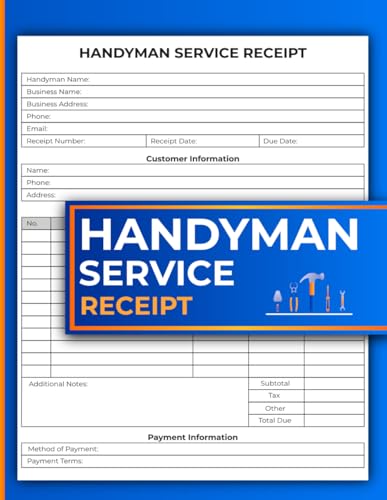
Handyman Service Receipt: Home Repair and Maintenance Invoice Book | Tradesman Work Form | 120 Pages .
Check price on Amazon
The Complete Do-it-Yourself Manual (Family Handyman)
Check price on Amazon
100 Things Every Homeowner Must Know: 100 Expert Tips to Save Money, Solve Problems, and Improve Your Home (Family Handyman 100)
Check price on Amazon
Family Handyman Whole House Repair Guide: Over 300 Step-by-Step Repairs
Check price on Amazon
Handyman Service Receipt Book: Tradesman Work Receipt Form | Home Repair and Maintenance Invoice Book | Tradesman Work Form | 50 Forms
Check price on Amazon
Sundpey 148 Pcs Portable Basic Hand Repair Home Tool Kit Set with Case Blue | with Ratchet Screwdriver & Adjustable Wrench & Water Pump Pliers, for Men Women, for Household House Garage Apartment Dorm
Check price on Amazon
Handyman Estimate Form Book: Handyman Service Estimating Sheets | Tradesman Work Order Forms | 100 Pages (50 Forms)
Check price on Amazon