Air Duct Sealing: The Complete Homeowner's Guide
Stop losing conditioned air through leaky ducts. Learn how professional and DIY duct sealing works, which materials perform best, and how to decide whether to tackle the project yourself or call a specialist.
EXPLORE SEALING METHODSWhy duct sealing matters: The average U.S. home loses 20–30% of the air moving through its ductwork because of leaks, holes, and poorly connected joints. That wasted air is money lost on every heating and cooling cycle. Sealing your ducts is one of the highest-return home performance improvements you can make.
What Is Air Duct Sealing and Why Should You Care?
Air duct sealing is the process of closing gaps, cracks, and loose joints in your HVAC ductwork so that conditioned air reaches the rooms it is meant to heat or cool. Every home has some degree of duct leakage — even newly built houses have measurable leakage at the air handler and at trunk-to-branch connections.
The consequences go beyond a slightly higher utility bill. Leaky return ducts in an attic or crawlspace can draw in dust, insulation fibers, and even exhaust gases. Leaky supply ducts in unconditioned spaces dump expensive cooled or heated air into places you never occupy. The result: rooms that never feel comfortable, a system that runs longer than it should, and poorer whole-home air sealing performance.
Sealing ducts is often paired with attic insulation and general air sealing in the attic, because the attic is where the largest thermal losses occur. If you are planning a broader energy upgrade, addressing duct leakage early makes every downstream improvement more effective.
Signs Your Ducts Need Sealing
Not every home needs a full duct sealing job. Use the checklist below to gauge whether your system is a strong candidate:
- Some rooms are consistently hotter or colder than the rest of the house.
- Energy bills climb faster than expected during heating or cooling season.
- You notice whistling, whooshing, or rattling sounds at supply registers.
- Dust accumulates unusually fast on surfaces near return vents.
- Visible gaps, disconnected joints, or crushed flex duct in the attic, basement, or crawlspace.
- Your HVAC system short-cycles or runs almost constantly to maintain setpoint.
- A professional blower door or duct blaster test shows leakage above the recommended threshold.
If two or more of these apply to your home, it is worth having a qualified technician measure duct leakage before deciding on a strategy.
Duct Sealing Methods Compared
There are four main approaches to sealing ductwork. Each has a place depending on accessibility, budget tier, and the size of the leaks. The table below uses universal quality descriptors rather than pricing, so it stays useful regardless of market conditions.
| Method | Best For | Access Required | Durability Tier | DIY Friendly? |
|---|---|---|---|---|
| Mastic sealant | Accessible joints, plenum connections, trunk-to-branch fittings | Direct reach to duct | Mid-range | Yes, with care |
| UL 181 foil tape | Sealing seams on rigid metal duct, quick touch-ups | Direct reach to duct | Entry-level | Yes |
| Aerosol-based sealing (Aeroseal) | Hidden leaks inside walls, ceilings, and inaccessible chases | Minimal — injected through system | Premium | No — professional only |
| Duct encapsulation / wrapping | Flex duct in attics, ducts in unconditioned spaces needing insulation upgrade | Full access to duct runs | High-end | No — best left to pros |
Sealing Materials: What Works and What Doesn't
Material choice is where many DIY duct sealing projects go wrong. Standard "duct tape" — the gray cloth-backed tape — is a poor choice for sealing ducts. It dries out, loses adhesion, and fails within a few heating seasons. Use only products rated for HVAC use.
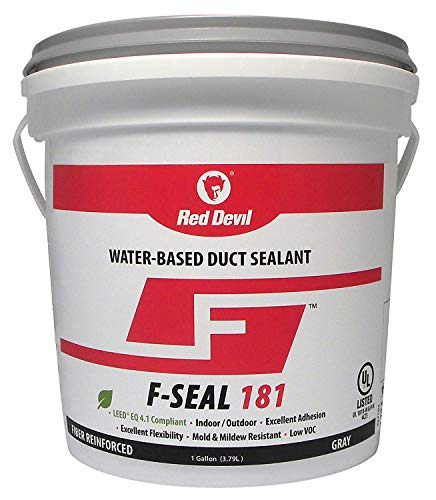
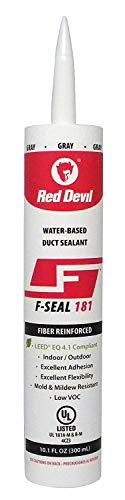
Mastic: A thick, brushable or trowel-applied sealant that bonds permanently to metal, flex duct, and fittings. It is the gold standard for accessible joints. Mid-range mastic products offer better flexibility and temperature tolerance than entry-level variants.
UL 181 foil tape: A pressure-sensitive foil tape approved for duct sealing. It performs well on clean, dry metal surfaces and is the go-to for quick seam sealing. It is not a substitute for mastic on larger gaps.
Aerosol sealant: Used in professional systems such as Aeroseal. A fine mist of sealant particles is circulated through the duct system; particles accumulate at leak edges and build a durable seal. This is the only realistic option for leaks hidden inside finished walls and ceilings.
Encapsulation and insulation: In attics and crawlspaces, ducts are often wrapped in insulation after sealing. This addresses both leakage and thermal loss. Encapsulation is typically specified when ducts run through unconditioned space and the homeowner wants a long-term performance upgrade.
Warning: Never use cloth-backed "duct tape," masking tape, or general-purpose caulk on ductwork. These materials fail under HVAC temperature cycles and can create a false sense of security. Also avoid sealing over wet insulation or mold — address moisture problems first.
DIY vs. Professional Duct Sealing
Many homeowners can handle accessible sealing work — particularly on exposed ducts in a basement or garage. The challenge is that the largest leaks are often the least accessible: behind drywall, in cramped attic chases, or under subflooring.
A reasonable approach is to seal what you can safely reach with mastic and UL 181 tape, then bring in a professional for a duct blaster test to measure what remains. If leakage is still significant, aerosol sealing or targeted access work may be warranted.
Professional duct sealing also includes diagnostic testing before and after the job, which is valuable for verifying results. If your broader goal is reducing overall home air leakage, a professional can combine air sealing with duct sealing and attic insulation in a single visit, which is usually more cost-effective than isolated projects.
For homes with other system-level issues, consider pairing duct work with routine AC maintenance so the entire HVAC system is inspected and tuned at the same time.
A Step-by-Step Overview of Accessible Duct Sealing
If you are sealing exposed ducts yourself, follow this general sequence:
- Turn off the HVAC system at the thermostat and breaker before working near ducts.
- Inspect the duct runs for disconnected joints, crushed flex duct, and gaps at fittings. Photograph problem areas.
- Clean surfaces where you plan to apply mastic or tape. Sealant bonds poorly to dusty or oily metal.
- Apply mastic to joints, seams, and plenum connections with a brush. Work the material into gaps rather than just skimming the surface.
- Use UL 181 foil tape on clean metal seams and to reinforce mastic edges where appropriate.
- Support sagging flex duct with proper hangers so it does not kink or collapse.
- Re-check connections after the system runs for a few days, and touch up any gaps that reappear.
For ducts in unconditioned attics or crawlspaces, follow up with insulation wrapping. This is also the right time to evaluate attic insulation levels, since duct and attic upgrades are usually performed together for maximum benefit.
How Much Can Duct Sealing Save?
The U.S. Department of Energy estimates that sealing and insulating ducts can improve heating and cooling efficiency by 20–30% in a typical home with leaky ducts. The real-world range is broad: homes with severe leakage in unconditioned spaces see the biggest gains, while newer homes with tighter ductwork see smaller improvements.
Duct sealing is also one of the more durable energy upgrades because it addresses the distribution system rather than just the equipment. Pairing it with other envelope improvements — like air sealing in the attic and general air sealing — compounds the savings.
If you are planning a larger renovation, duct sealing is worth scheduling before major finish work. It is far easier to seal and inspect ducts while walls or ceilings are open than after the project is complete. Homeowners researching broader home improvement priorities often rank duct and envelope work high because of the return on investment.
When to Call a Professional
Consider professional help when:
- Ducts are mostly hidden behind finished walls or ceilings.
- A duct blaster test shows leakage above the threshold your contractor recommends.
- You suspect disconnected ducts inside a wall cavity or floor system.
- There is visible mold, pest activity, or moisture damage inside the ductwork.
- You want verified before-and-after leakage measurements.
- The home has a complex zoned system or multiple air handlers.
A qualified HVAC contractor can perform a duct blaster test, recommend the appropriate sealing method, and verify results. For homeowners also evaluating AC maintenance, combining services in one visit is usually more efficient.
Frequently Asked Questions
How much can air duct sealing save on energy bills?
Sealing and insulating ducts can improve heating and cooling efficiency by as much as 20–30%, according to the U.S. Department of Energy. Actual savings depend on the extent of leakage, duct location, and local climate.
What is the difference between duct sealing and duct cleaning?
Duct sealing closes gaps and joints to prevent air loss. Duct cleaning removes dust and debris from inside the ductwork. Sealing is an energy and comfort measure; cleaning is an indoor air quality measure. They complement each other but are not interchangeable.
Can I seal my own air ducts?
Homeowners can seal accessible joints with mastic or UL 181 foil tape. Leaks hidden behind walls, in crawlspaces, or in attics are difficult to reach and often require professional equipment such as aerosol-based sealing systems.
How do I know if my ducts are leaking?
Common signs include rooms that never reach the thermostat setpoint, high energy bills, dusty air, whistling noises at vents, and visible gaps at duct joints. A professional duct blower test can measure leakage precisely.
What is Aeroseal and how does it work?
Aeroseal is an aerosol-based duct sealing technology. A sealant mist is injected into the duct system; as it escapes through leaks, particles stick to the edges and gradually build a permanent seal. It is especially effective for hard-to-reach leaks inside walls and ceilings.
Should duct sealing be done before or after attic insulation?
Seal ducts before adding or upgrading attic insulation. Sealing requires access to duct joints, and insulation can obscure leaks. If you are also planning attic insulation, schedule duct sealing first so the insulation can be installed without interruption.