Electric Panel for House: The Complete Guide to Choosing, Sizing & Upgrading
Everything you need to know about residential electric panels — from understanding amperage and panel types to recognizing when an upgrade is necessary for safety and modern power demands.
Explore the GuideWhy This Matters: Your home's electric panel is the command center of your entire electrical system. It distributes power to every circuit, protects your home from overloads, and must safely handle the demands of modern appliances, EV chargers, and renewable energy systems. Choosing the right panel is not just about code compliance — it is about long-term safety and capacity for your home's evolving needs.
What Is an Electric Panel and What Does It Do?
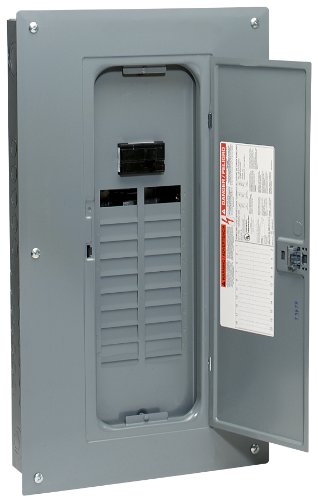
An electric panel — also called a breaker box, service panel, load center, or distribution board — is the metal enclosure that houses your home's circuit breakers. It receives power from the utility company through the main service wires and distributes it to individual circuits throughout your house. Each circuit breaker protects a specific zone or appliance by automatically tripping when current exceeds safe levels.
The panel also serves as the single point where you can manually shut off power to the entire house in an emergency. Modern panels include a main breaker for whole-home disconnection, individual branch breakers for circuits, and a neutral/ground bar for safe return paths. Understanding these components is essential whether you are building a new home, renovating an existing one, or simply trying to make sense of your electrical system.
If you are planning broader electrical work alongside your panel project, our guide on do-it-yourself home renovation covers how electrical upgrades fit into a larger renovation plan. For projects that involve structural or system-level changes, consulting a home renovation contractor can help you coordinate the work safely and efficiently.
Key Components of a Residential Electric Panel
- Main Breaker: A large switch that disconnects power to the entire panel. Typically rated at 100, 150, 200, or 400 amps.
- Branch Circuit Breakers: Individual switches that protect specific circuits — lighting, outlets, appliances, and dedicated equipment.
- Bus Bars: Metal strips that conduct electricity from the main breaker to the branch breakers and neutral/ground connections.
- Neutral Bar: The termination point for all white neutral wires returning current to the utility.
- Ground Bar: Connects all bare copper and green ground wires to the earth grounding system.
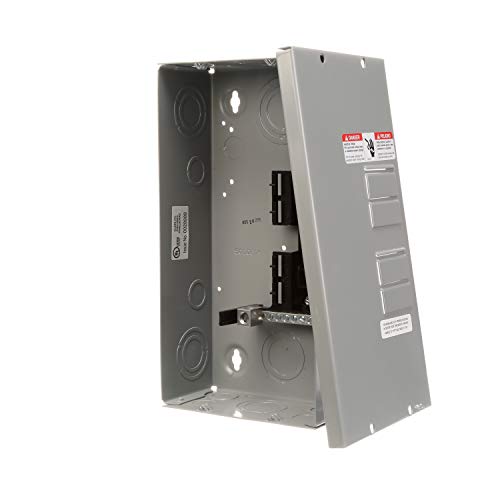
- Knockouts: Pre-scored circular openings on the panel enclosure for routing conduit and cable entries.
Types of Electric Panels for Houses
Residential electric panels fall into several categories, each suited to different applications and service configurations. Understanding these distinctions will help you have an informed conversation with your electrician.
Main Breaker Panel
The most common type in modern homes. A main breaker panel includes a built-in disconnect switch that can shut off power to all circuits at once. This is the standard choice for the primary service panel in a single-family home because it provides a single, clearly labeled point of emergency disconnection. Main breaker panels are available in capacities ranging from 100 to 400 amps, with 200-amp panels being the contemporary standard for new construction.
Main Lug Panel
A main lug panel (sometimes called a main lug load center) does not include a main disconnect breaker. Instead, its bus bars are connected directly to lugs that receive power from an upstream breaker or service disconnect. These panels are typically used as subpanels — for example, in a detached garage, workshop, or addition — where a breaker at the main panel provides disconnection. Main lug panels are simpler and more compact but are not appropriate as the primary service panel in most residential applications.
Subpanel (Distribution Panel)
A subpanel is any panel downstream of the main service panel. It receives power through a feeder breaker at the main panel and redistributes it to circuits in a specific area. Subpanels are common in finished basements, garages, pool houses, and large additions where running individual circuits all the way back to the main panel would be impractical. When installing a subpanel, the neutral and ground bars must remain isolated (unless the subpanel is in a separate structure with its own grounding electrode), and the feeder must be properly sized and protected.
Fuse Box (Legacy Panel)
Older homes may still have fuse boxes rather than breaker panels. Fuse boxes use screw-in or cartridge fuses instead of resettable breakers. While some fuse boxes are perfectly safe when properly maintained, many are undersized for modern electrical loads and may lack proper grounding. If your home still has a fuse box, it is worth having a licensed electrician evaluate whether an upgrade to a breaker panel is advisable — especially if you are adding appliances, finishing a basement, or planning a home improvement project that increases electrical demand.
How to Determine the Right Amperage for Your House
Panel amperage is the maximum current the panel is rated to handle. Choosing the correct size depends on your home's square footage, the types of appliances you use, and future plans. Here is a general framework:
| Amperage | Typical Application | Best For |
|---|---|---|
| 100 Amp | Small homes, apartments, older properties with gas appliances | Entry-level service for compact living spaces |
| 150 Amp | Mid-size homes with some electric appliances | Mid-tier service for standard family homes |
| 200 Amp | Modern single-family homes, homes with EV chargers or electric heating | Balanced tier — the contemporary standard for new construction |
| 320–400 Amp | Large homes, multi-zone HVAC, pool equipment, heavy EV charging | High-end tier for properties with substantial electrical demands |
A qualified electrician will perform a formal load calculation based on the National Electrical Code (NEC) to determine the minimum service size for your specific situation. This calculation accounts for square footage, small appliance circuits, laundry circuits, and the nameplate ratings of major appliances. Do not guess at panel size — undersizing leads to nuisance tripping, while oversizing adds unnecessary expense and complexity.
If your home is undergoing a larger renovation — such as a kitchen remodel or room addition — the electrical panel upgrade may be just one part of the project. Resources like our guide on home renovation services and renovation contractor overview can help you understand how electrical work fits into the broader scope of a remodel.
Signs Your House Needs a Panel Upgrade
An electric panel is not a forever component. Technology changes, electrical demands grow, and safety standards evolve. Here are the most common indicators that an upgrade or replacement deserves serious consideration:
- Frequent breaker trips: If breakers trip regularly under normal loads, the panel may be undersized or a circuit may be overloaded.
- Flickering or dimming lights: Widespread flickering when appliances cycle on can indicate an overloaded panel or loose connections.
- Burning smell or scorch marks: Any smell of burning plastic or visible discoloration around breakers is a serious fire hazard — shut off power and call an electrician immediately.
- Known hazardous brands: Certain legacy panel brands (such as Federal Pacific Stab-Lok and Zinsco) have well-documented failure rates and are generally recommended for replacement.
- Insufficient space for new circuits: If you cannot add a circuit for a new appliance, EV charger, or hot tub without tandem breakers, a larger panel is likely needed.
- Age beyond 30–40 years: Older panels may have corrosion, worn breakers, or outdated grounding that no longer meets current safety standards.
- Adding major electrical loads: EV charging, electric tankless water heaters, heat pumps, and solar installations all increase demand and may require a service upgrade.
If you are planning a renovation that will increase your home's electrical load — such as a basement finish or kitchen expansion — factor the panel evaluation into your planning from the start. Our guides on basement renovations and kitchen remodeling contractor selection can help you sequence the work properly.
Electric Panel Installation: What to Expect
Panel replacement or upgrade is a significant electrical project that typically requires a permit and a licensed electrician. The process generally follows these steps:
- Assessment and load calculation: The electrician evaluates your current service, calculates your load, and determines the appropriate panel size and type.
- Permit application: Most jurisdictions require an electrical permit for panel replacement. The permit ensures the work will be inspected for code compliance.
- Utility coordination: The utility company must disconnect the service drop or lateral before the old panel can be safely removed. This is scheduled in advance.
- Panel removal and mounting: The old panel is removed, and the new panel is mounted in position. The enclosure must be properly grounded and bonded.
- Circuit transfer: Existing branch circuits are labeled, disconnected from the old panel, and re-terminated in the new panel. This is where accurate labeling is critical.
- Grounding and bonding: The grounding electrode conductor and bonding jumpers are connected according to code requirements.
- Inspection and re-energization: The electrical inspector verifies the work, and the utility reconnects service. The electrician then tests all circuits.
Panel installation is not a typical do-it-yourself project. The main service conductors remain energized until the utility disconnects them, and improper installation can create severe shock and fire hazards. For any work that touches the service entrance, professional electricians and proper permitting are essential. If your project also involves broader system upgrades, resources like our home systems category and contractor for home repairs guide can help you find qualified help.
Code Requirements and Safety Considerations
The National Electrical Code (NEC) sets minimum standards for panel selection, installation, grounding, and clearances. Local jurisdictions may adopt the NEC with amendments, so always confirm requirements with your local building department. Key considerations include:
- Working clearance: A minimum of 36 inches of clear space in front of the panel and 30 inches of width is required.
- Grounding electrode system: The panel must connect to a grounding electrode (ground rod, water pipe, or concrete-encased electrode) per code.
- Neutral and ground separation: In subpanels, neutral and ground bars must be isolated; in the main service panel, they are bonded together.
- AFCI/GFCI protection: Modern code requires arc-fault circuit interrupter protection for most branch circuits and ground-fault circuit interrupter protection in wet locations.
- Panel labeling: Every circuit must be clearly and accurately labeled. A well-labeled panel is a safety feature, not a nicety.
Always verify local code requirements with your authority having jurisdiction (AHJ). The NEC is a model code, and local amendments may impose additional requirements.
Features to Look for in a Residential Electric Panel
When evaluating panel options with your electrician, consider the following quality indicators and design features:
| Feature | Why It Matters | Tier Guidance |
|---|---|---|
| Copper bus bars | Better conductivity and corrosion resistance than aluminum | Standard in mid-range and premium panels |
| Silver-plated copper bus | Superior conductivity and longevity | Common in top-tier and professional-grade panels |
| Copper wiring throughout | Improved reliability and heat tolerance | Characteristic of premium and high-end tier panels |
| Powder-coated enclosure | Corrosion resistance and durability | Standard on most modern panels |
| Copper-to-copper connections | Reduces galvanic corrosion at terminations | Found in higher-tier product lines |
| Generous gutter space | Easier wire routing and cooler operation | More spacious in premium and commercial-grade panels |
| Plug-on neutral design | Simplifies AFCI/GFCI breaker installation | Available in mid-range and above |
| Copper ground bars | Reliable grounding path | Standard on quality panels |
Entry-level panels typically use aluminum bus bars and provide basic functionality. Mid-range panels often add copper bus bars and better breaker options. Premium and top-tier panels emphasize copper throughout, generous wire space, and compatibility with advanced breaker types including AFCI, GFCI, and smart monitoring. For most residential applications, a well-specified mid-range or premium panel from a reputable manufacturer represents a solid choice for its tier and a long-term investment in safety and capacity.
Adding a Subpanel: When It Makes Sense
A subpanel is a secondary distribution panel fed from the main service panel. It is a practical solution when you need additional circuit capacity in a specific area — a finished basement, detached garage, workshop, or outdoor structure. Subpanels reduce the length of individual circuit runs and make it easier to shut off power for maintenance in that zone.
However, adding a subpanel does not increase your home's total electrical capacity. The feeder breaker at the main panel still draws from the same service. If your main panel is already at capacity, a subpanel alone will not solve the problem — a service upgrade may be necessary. A licensed electrician can evaluate whether your existing service can support an additional subpanel or whether a main panel upgrade should come first.
For homeowners planning a basement finish or garage conversion, the electrical planning should happen early. Our guides on basement finishing costs and garage conversions discuss how electrical scope fits into these projects. If you are also considering broader property improvements, our overview of home improvements that increase property value can help you prioritize electrical upgrades among other investments.
Working with a Licensed Electrician
Panel work is not the place to cut corners. A licensed electrician brings the training, experience, and insurance necessary to perform the work safely and to code. When evaluating contractors:
- Verify state or local licensing and insurance.
- Ask whether the contractor will pull the required permits.
- Request a written load calculation if you are unsure about sizing.
- Confirm that the work will be inspected by the local authority.
- Ask for references from similar residential panel projects.
- Ensure the contract specifies panel brand, model, amperage, and breaker types.
If your electrical panel work is part of a larger renovation, our resources on home renovation contractor selection and residential remodelers can help you find qualified professionals who coordinate electrical, plumbing, and structural work. For whole-house projects, consider our guide on whole house renovations and custom home renovations to understand how electrical upgrades fit into the bigger picture.
Frequently Asked Questions
What size electric panel does a house need?
Most modern single-family homes are built with a 200-amp service panel. Smaller homes with gas appliances may function on 100 amps, while larger homes with electric heating, EV chargers, or multiple HVAC systems may require 320–400 amps. The correct size is determined by a formal load calculation performed by a licensed electrician, not by square footage alone.
When should an electric panel be replaced?
Replacement is typically warranted when the panel is a known hazardous brand, shows signs of overheating, corrosion, or scorch marks, has insufficient capacity for current and planned loads, or is more than 30–40 years old. Frequent breaker tripping, flickering lights, and a burning smell are urgent warning signs that require immediate evaluation by a licensed electrician.
Can I replace an electric panel myself?
Panel replacement is not a typical DIY project. It involves working with the main service conductors, which remain energized until the utility disconnects them. Most jurisdictions require a licensed electrician and a permit for panel replacement. The safety risks — including arc flash, shock, and fire — are severe. For any work involving the service entrance, professional installation is strongly recommended.
What is the difference between a main breaker panel and a main lug panel?
A main breaker panel includes a built-in main disconnect breaker that can shut off power to the entire panel. It is the standard choice for the primary service panel in a house. A main lug panel does not have a built-in disconnect and is typically used as a subpanel, relying on an upstream breaker for disconnection. Main lug panels are not appropriate as the primary service panel in most residential applications.
How long does an electric panel last?
A well-installed quality panel can last 30 to 40 years or more. However, breakers themselves may wear out sooner and should be tested periodically. Environmental factors such as moisture, corrosion, and heat can shorten panel life. If your panel is approaching or beyond the 30-year mark, an evaluation by a licensed electrician is prudent — especially if you are adding electrical loads.
Does a panel upgrade increase home value?
A panel upgrade can contribute to resale appeal because it signals that the home's electrical system is safe and modern. Buyers and inspectors look favorably on updated electrical service, especially in older homes. While a panel upgrade alone may not dramatically change appraised value, it removes a potential red flag in inspections and supports the overall perception of the home's condition. Combined with other improvements, electrical upgrades can support property value — see our guide on home improvements that increase property value for a broader perspective.
Can I add a subpanel without upgrading the main panel?
Sometimes, yes — if your main panel has sufficient capacity and physical space for the feeder breaker. However, a subpanel does not create additional electrical capacity. If your main service is already loaded near its limit, adding a subpanel will not solve the underlying capacity issue. An electrician must evaluate your total load and available capacity before determining whether a subpanel alone is sufficient or whether a service upgrade is required.
Bottom Line: The right electric panel for your house depends on your current electrical load, your plans for future additions, and local code requirements. Whether you are building new, renovating, or addressing an aging panel, the safest path is an evaluation by a licensed electrician, a proper load calculation, and a code-compliant installation with permits and inspection. For broader project planning, explore our home improvement project resources and improvement near me directory to connect with qualified professionals in your area.